Officiant Ordination | Study-Based Program

Begin Your Journey Here

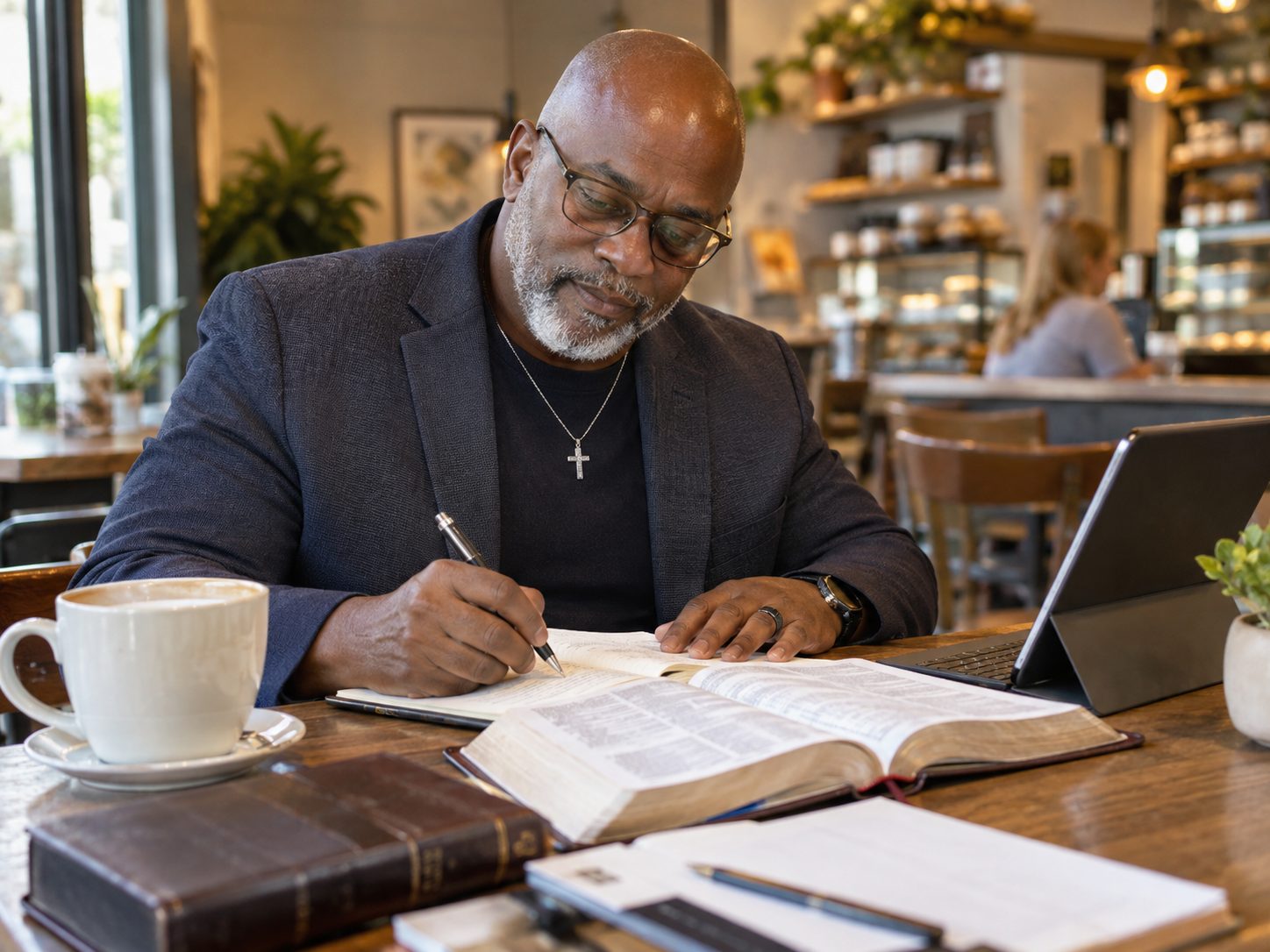
Christian officiant preparing for ministry service

Start With the Officiant Pathway That Matches Your Calling

Christian Leaders Alliance recognizes several Officiant ministry pathways. Each role combines study, ministry preparation, and role-specific training designed to equip Christian leaders for the people and settings they are called to serve.

✓

Christian Wedding Officiant is one of the foundational Officiant pathways and also serves as a prerequisite for some advanced Officiant roles, including Romance Officiant and Ministry Officiant.

✓

Other pathways, such as Funeral Officiant and Catechumen, follow their own role-specific preparation and do not require every student to begin with the same credential.

✓

As your calling develops, you can continue into additional Officiant roles through further study, endorsement, and ministry preparation within the Christian Leaders Alliance credentialing system.

Explore Officiant Ordination Pathways

Christian Leaders Alliance recognizes several study-based Officiant roles. Each pathway prepares Christian leaders for a particular area of ministry through biblical study, role-specific training, endorsement where required, and accountable ministry recognition.

Christian leader beginning foundational ministry preparation

Catechumen

The Catechumen role provides an accessible beginning point for Christians entering recognized ministry preparation and learning how to participate in the multiplication of Christian leaders.

Current credential requirements:
  • 2.00 GPA
  • Multiplying Christian Leaders — 1 Module
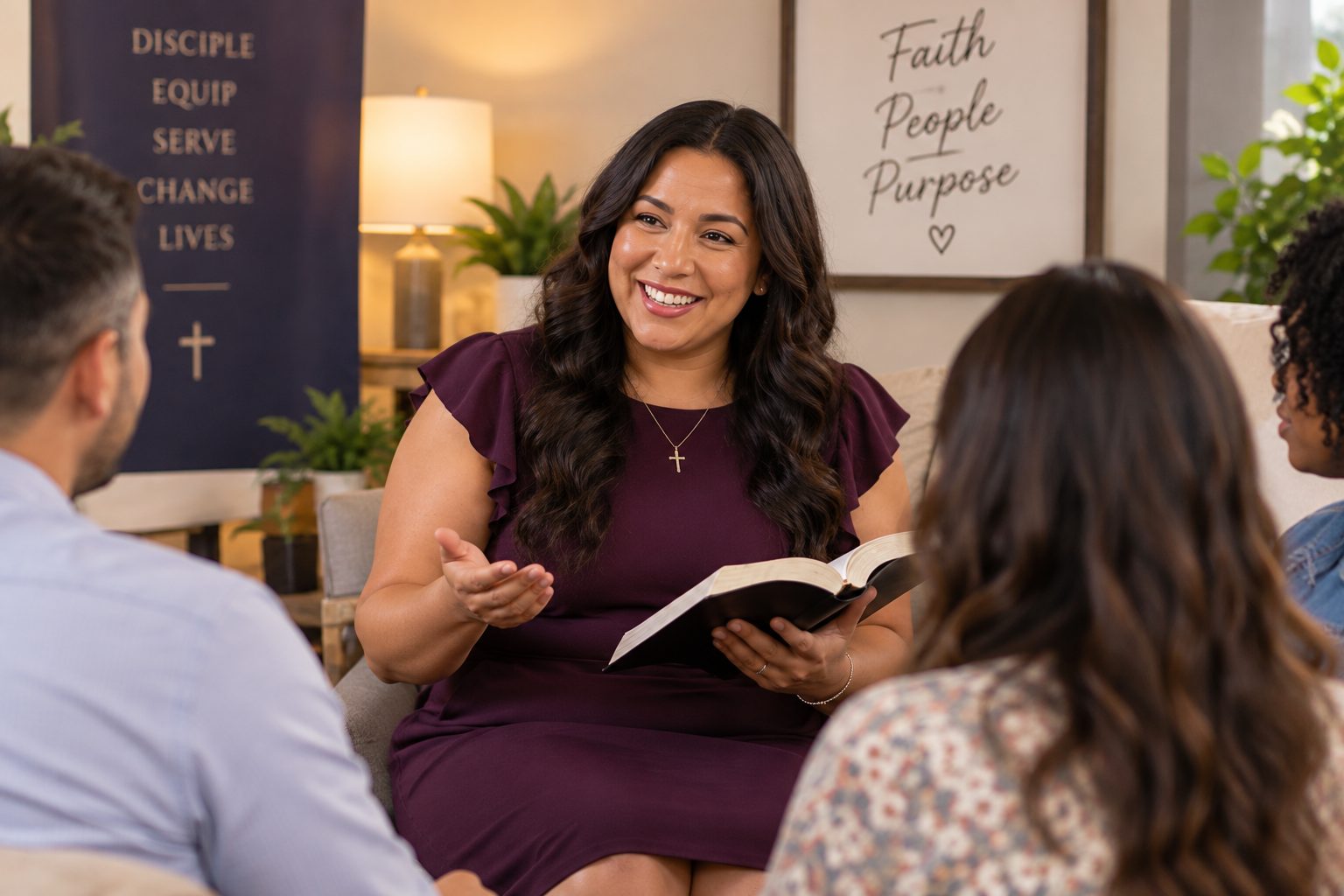
Romance Officiant helping a couple celebrate their relationship

Romance Officiant

Build on Wedding Officiant preparation to serve couples through relationship-centered ceremonies, meaningful celebrations, and other moments that honor love, commitment, and Christian relationship values.

Current credential requirements:
  • Christian Wedding Officiant credential
  • 2.00 GPA
  • Level 1 Endorsement
  • Multiplying Christian Leaders — 1 Module
  • Romance Officiant Skills — 2 Modules
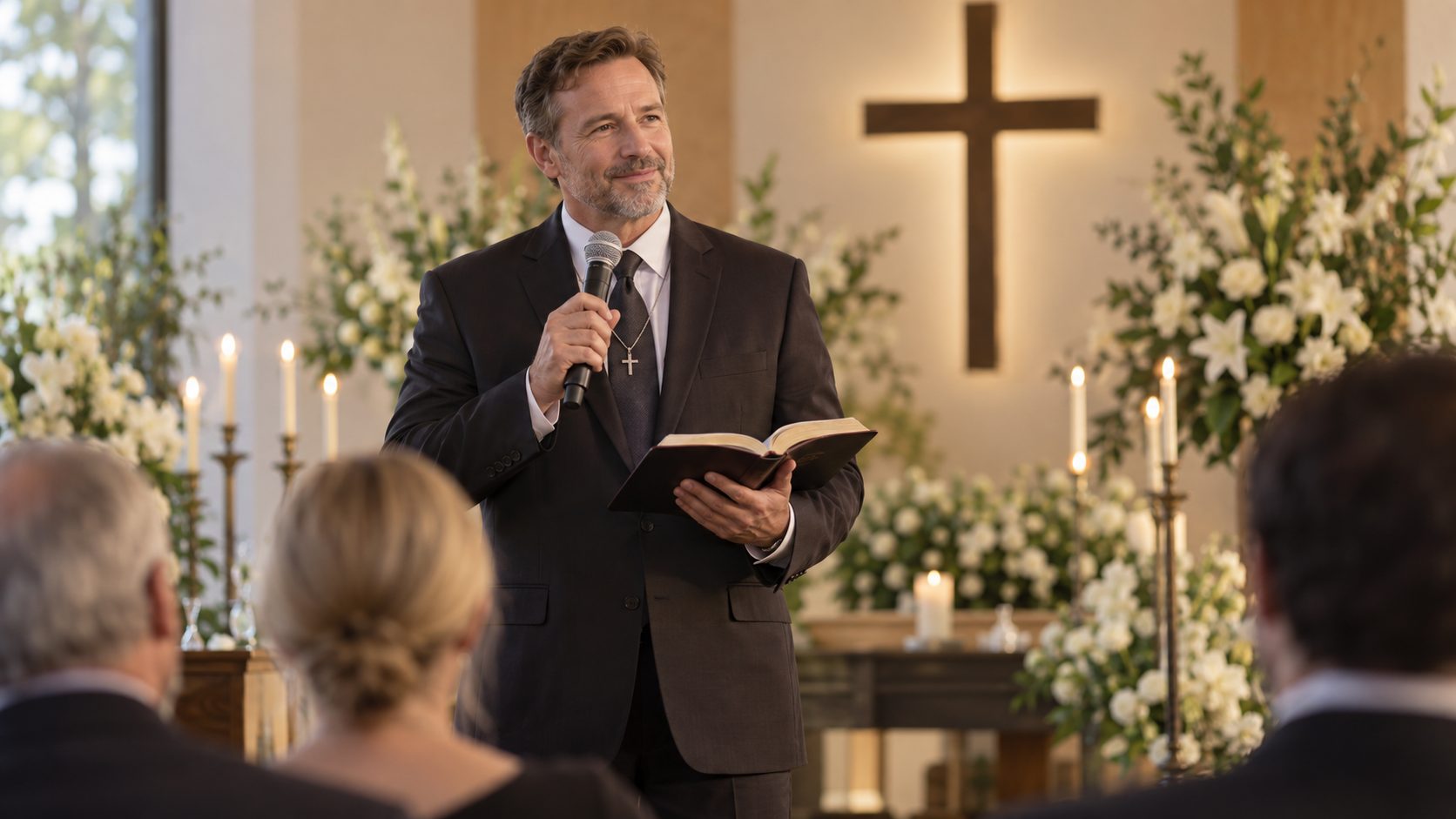
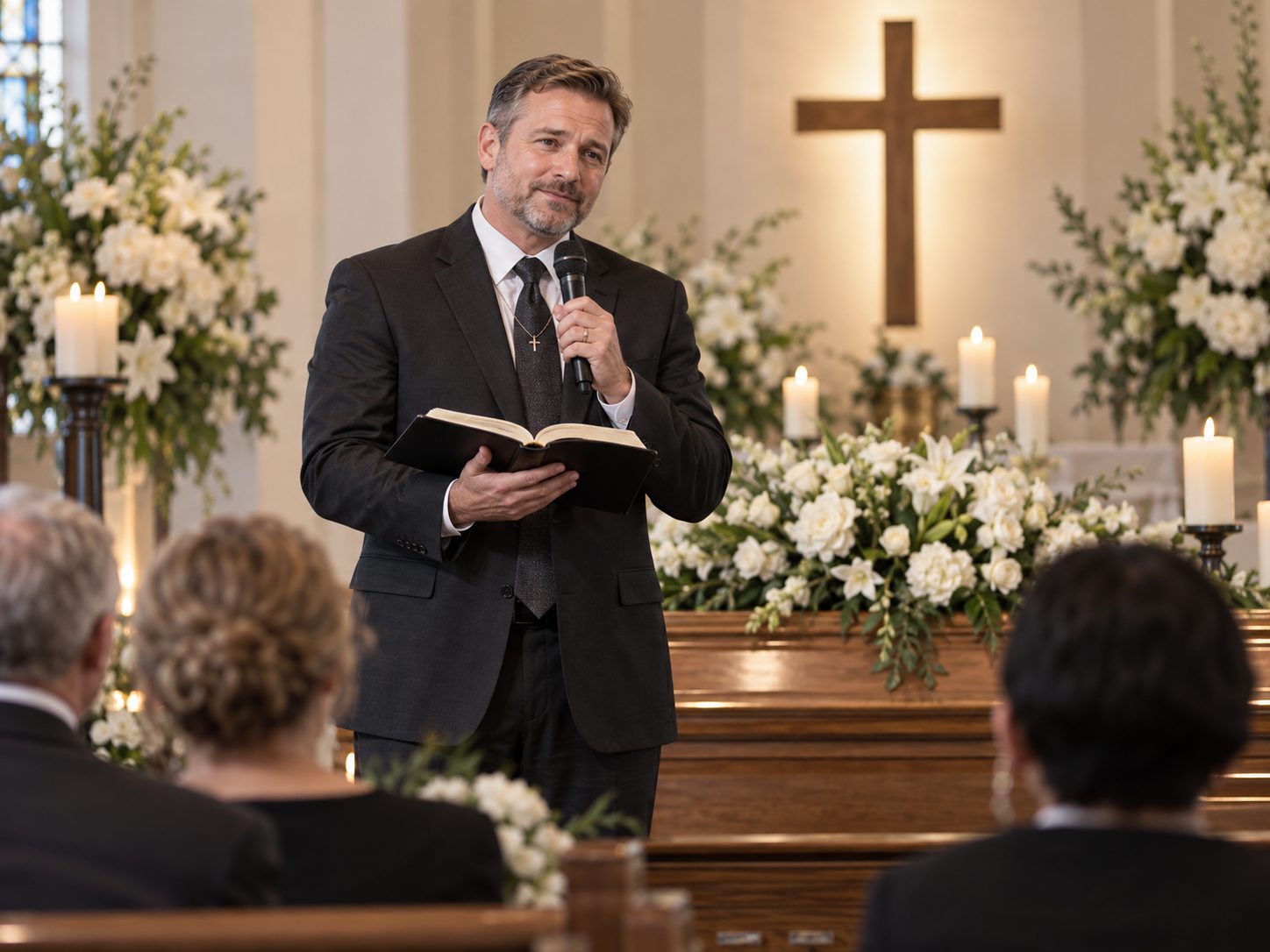
Funeral Officiant serving a grieving family with Christian care

Funeral Officiant

Prepare to serve individuals and families during times of loss through compassionate Christian presence, memorial and funeral ceremony leadership, biblical encouragement, and respectful ministry care.

Current credential requirements:
  • 2.00 GPA
  • Level 1 Endorsement
  • Multiplying Christian Leaders — 1 Module
  • Funeral Officiant Skills — 2 Modules
Ministry Officiant serving people through Christian ceremony and ministry

Ministry Officiant

Expand beyond wedding ministry with additional preparation for Christian ceremonies, ministry service, leadership, and officiant responsibilities in a broader range of ministry settings.

Current credential requirements:
  • Christian Wedding Officiant credential
  • 2.00 GPA
  • Level 1 Endorsement
  • Multiplying Christian Leaders — 1 Module
  • Ministry Officiant Skills — 3 Modules
Youth Ministry Officiant serving young people through Christian ministry

Youth Ministry Officiant

Prepare for a broader Officiant ministry role focused on serving younger people through Christian leadership, ceremony ministry, relational care, theological preparation, and youth ministry development.

Current credential requirements include:
  • 2.00 GPA
  • Level 1 Endorsement
  • Multiplying Christian Leaders — 1 Module
  • Youth Ministry Leadership — 1 Unit
  • Wedding Officiant Skills — 1 Module
  • Romance Officiant Skills — 2 Modules
  • Ministry Officiant Skills — 3 Modules
  • Faith Officiant Skills — 2 Modules
  • Christian Leaders Theology — 1 Module
  • Youth Ministry Officiant Ordination Program

A Study-Based Pathway Into Officiant Ministry

Christian officiant serving people through ministry Christian officiant preparing for ministry service Christian leaders serving their community

What Is Officiant Ordination?

Officiant Ordination through Christian Leaders Alliance recognizes Christian leaders who have completed study-based preparation for specific ceremony and ministry roles. Rather than offering a one-size-fits-all credential, the Officiant pathway equips leaders according to the responsibilities of the ministry role they are preparing to serve.

Officiants may serve couples preparing for marriage, families experiencing loss, churches and ministries, young people, or other relational communities depending on the credential they pursue. Each role combines biblical learning, practical ministry skills, role clarity, and accountable Christian service.

Christian Leaders Institute provides the educational preparation for these pathways, while Christian Leaders Alliance provides recognition, credentialing, accountability, and clergy standing within the approved Officiant role.

The result is a ministry pathway designed to prepare Christian leaders not simply to conduct ceremonies, but to serve people with biblical integrity, compassion, wisdom, appropriate boundaries, and confidence in the responsibilities entrusted to them.

What Officiant Ministry Is ✅

✓

A study-based Christian ministry pathway that prepares leaders for specific ceremony and officiant responsibilities.

✓

A way to serve people during meaningful life moments such as weddings, funerals, relationship celebrations, ministry ceremonies, and other approved areas of Christian service.

✓

Ministry that combines biblical understanding, practical preparation, role clarity, and Christian accountability.

✓

Recognition of a Christian leader who has completed the preparation required for a specific Officiant credential through Christian Leaders Alliance.

✓

A ministry calling that encourages leaders to serve with compassion, humility, integrity, appropriate boundaries, and respect for the people entrusted to their care.

Christian officiant serving people through accountable ministry
Christian leaders preparing for responsible ministry service

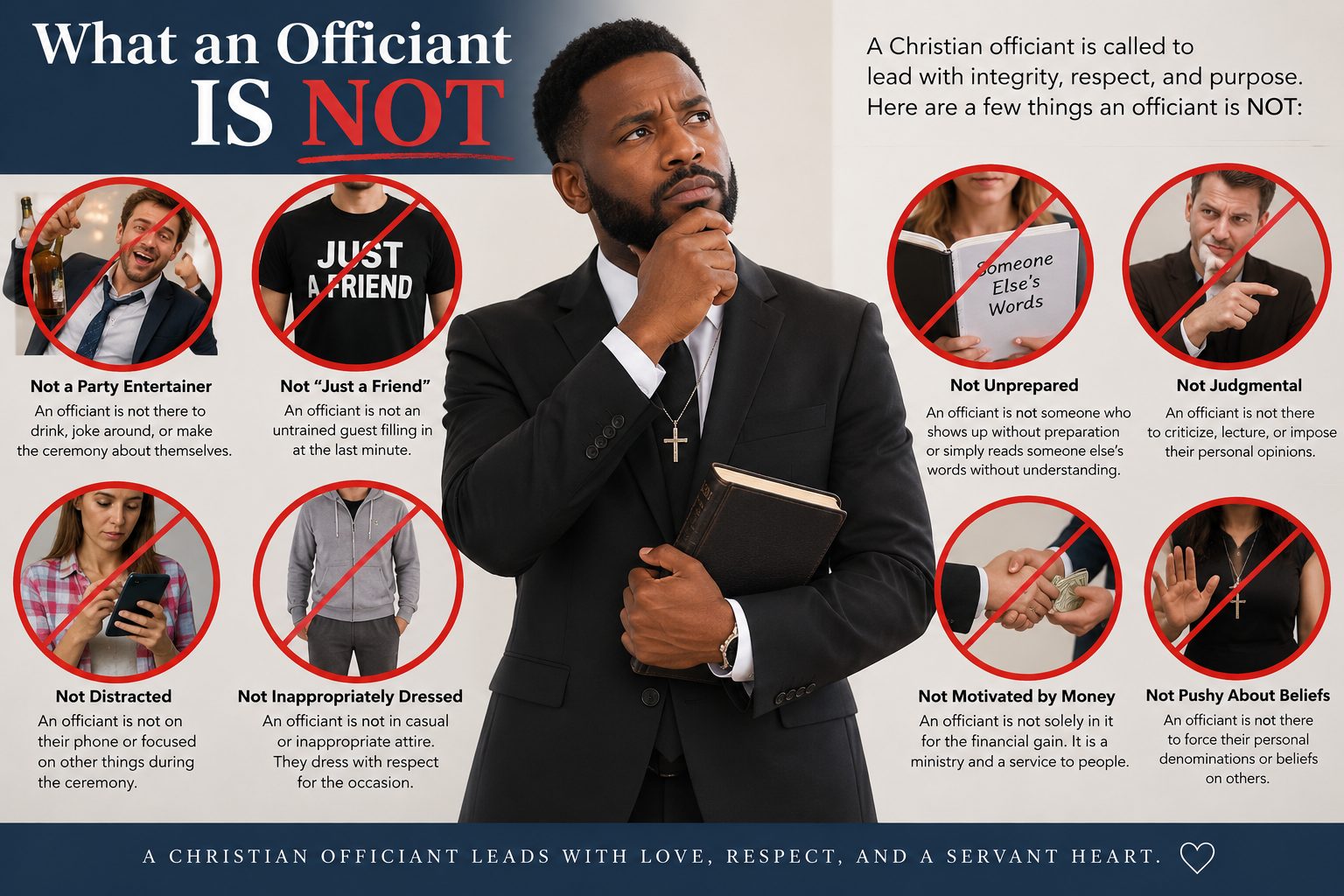
What Officiant Ministry Is Not ❌

×

A click-and-ordain credential issued without study, preparation, or ministry accountability.

×

Permission to serve outside the scope of the Officiant role or credential a leader has actually completed.

×

A replacement for professional counseling, psychotherapy, medical care, legal advice, or other services that require qualified professionals.

×

A guarantee that every Officiant role carries the same authority, legal recognition, or permitted function in every jurisdiction or institution.

×

A substitute for the local church, pastoral leadership, Christian community, or ongoing spiritual formation.

×

A ministry role that allows an officiant to control another person’s decisions, override healthy boundaries, or replace the work of the Holy Spirit.

Begin With Foundational Training

Officiant ministry includes several recognized roles, and each pathway has its own training requirements. Rather than requiring every student to begin with the same credential, Christian Leaders Alliance provides defined study pathways based on the Officiant role you are preparing to serve.

1

Identify Your Officiant Calling

Begin by considering the people and ministry settings you are called to serve. Wedding ministry, funeral ministry, relationship-centered ceremonies, broader ministry officiation, and youth ministry each carry different responsibilities and preparation needs.

2

Complete the Required Training

Follow the course requirements connected with your chosen Officiant credential. Some pathways begin with role-specific training, while others build on an existing Christian Wedding Officiant credential and add further ministry preparation.

3

Grow Into Additional Roles

As your ministry develops, you may pursue additional Officiant credentials that expand your preparation and recognized ministry scope. Each new role builds on completed study, endorsement where required, and continued Christian accountability.

Christian Wedding Officiant Is a Foundation for Several Advanced Roles

The Christian Wedding Officiant credential is one of the primary Officiant pathways within Christian Leaders Alliance and serves as a prerequisite for some advanced roles, including Romance Officiant and Ministry Officiant.

Other credentials, such as Funeral Officiant and Catechumen, have their own defined preparation requirements. This allows students to begin with the pathway that best matches their calling rather than completing training that does not apply to the ministry role they intend to serve.

Pursue Officiant Ordination Recognition

Christian Leaders Alliance recognition follows preparation. Each Officiant credential has defined requirements that may include coursework, a minimum GPA, endorsement, prerequisite credentials, and role-specific ministry training. Recognition reflects the pathway you have actually completed.

1

Complete Your Training

Finish the courses and prerequisite requirements connected with your specific Officiant role. Your credential panel tracks the requirements that apply to the pathway you are pursuing.

2

Complete Endorsement When Required

Many Officiant credentials require Level One Endorsement. Endorsement provides relational recognition of Christian character, integrity, spiritual maturity, and readiness for accountable ministry service.

3

Receive Role-Specific Recognition

When the requirements are completed, Christian Leaders Alliance recognizes you within the Officiant role you have earned. Your ministry recognition reflects your completed training and approved scope of service.

4

Prepare for Public Ministry Service

Update your Christian Leaders profile, review your credential information, prepare for commissioning or public recognition, and continue serving with Christian accountability and role clarity.

Recognition Follows Preparation

Christian Leaders Alliance does not treat ordination as a product that can simply be purchased. Training, credential requirements, endorsement where applicable, and ministry recognition come first.

Physical credential products and recognition kits are optional items that may be ordered after your credential requirements have been completed. Purchasing a kit does not create, replace, or upgrade your ministry recognition.

Your Officiant role remains connected to the preparation, credential requirements, accountability, and ministry scope associated with that specific pathway.

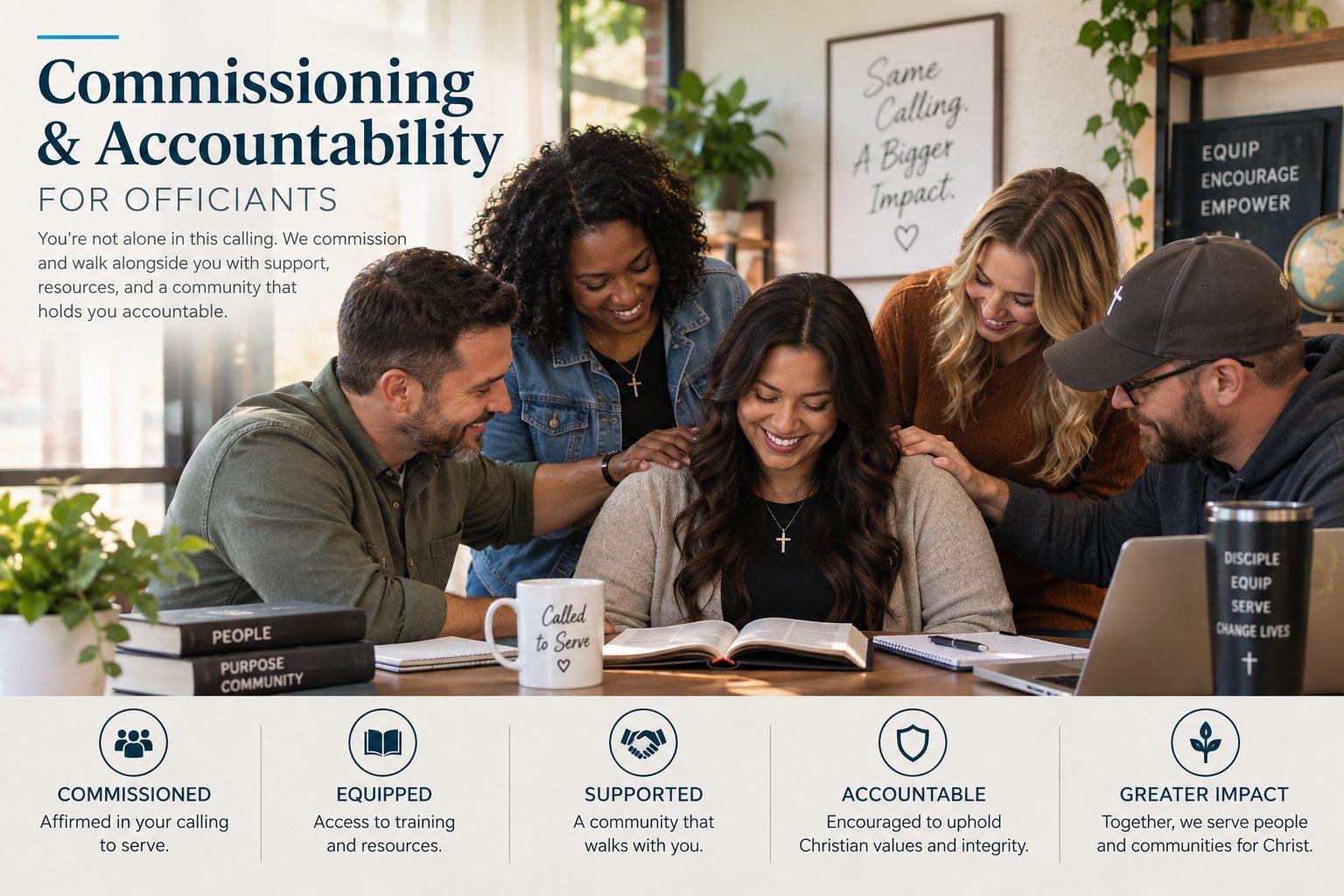
Commissioning and Accountability

Officiant ordination is not only about completing courses. Christian Leaders Alliance encourages recognized Officiants to enter ministry with prayer, public recognition, relational accountability, clear ministry boundaries, and an ongoing commitment to Christian character and service.

Christian officiant participating in a ministry commissioning service

Public Commissioning

After completing your credential requirements, consider participating in a commissioning or public recognition service where trusted Christian leaders, family, church members, or ministry partners can pray over your calling and affirm your commitment to serve.

Christian Accountability

Healthy ministry is strengthened through relationships with mature Christians, local church leaders, mentors, ministry partners, and others who can encourage integrity, humility, wisdom, and faithful service.

Role Clarity

Serve within the scope of the Officiant credential you have completed. Wedding, funeral, romance, ministry, youth ministry, and other recognized roles may involve different responsibilities, preparation, and ministry boundaries.

Continued Growth

Ordination recognition is not the end of ministry development. Continue growing through biblical study, practical experience, prayer, mentorship, additional training, and responsible service in your church and community.

Officiant Recognition Carries Responsibility

Christian Leaders Alliance Officiants are expected to serve with biblical integrity, respect, healthy boundaries, confidentiality awareness, humility, and appropriate accountability.

A credential does not authorize an Officiant to operate beyond the role for which they have been prepared, nor does it replace local laws, institutional requirements, professional licensing, or the authority of churches and organizations where those requirements apply.

Commissioning helps make ministry recognition relational and public: you are not simply receiving a credential—you are accepting a responsibility to serve others faithfully.

Frequently Asked Questions

Officiant ministry includes several different credential pathways. These questions explain how training, recognition, endorsement, legal requirements, and role-specific preparation work within Christian Leaders Alliance.

What is Officiant Ordination?

Officiant Ordination through Christian Leaders Alliance is a study-based ministry recognition pathway for Christians preparing to serve in specific ceremony and officiant roles.

Depending on the credential, an Officiant may prepare to serve through weddings, funerals, relationship ceremonies, ministry functions, youth ministry, or other approved areas of Christian service.

Do all Officiants begin with the same course or credential?

No. Christian Leaders Alliance recognizes several Officiant roles, and each pathway has its own training requirements.

Some pathways begin with role-specific courses, while others build on credentials or training that have already been completed.

Does every Officiant need to become a Christian Wedding Officiant first?

No. Christian Wedding Officiant is an important foundational pathway and is a prerequisite for some advanced Officiant roles, including Romance Officiant and Ministry Officiant.

Other credentials, including Funeral Officiant and Catechumen, have their own defined preparation requirements.

What is a Catechumen?

Catechumen is an entry-level Christian Leaders Alliance credential for Christians beginning recognized ministry preparation.

It provides an accessible starting point for learning, Christian service, and participation in the multiplication of Christian leaders.

Can I earn more than one Officiant credential?

Yes. Officiants may continue their education and pursue additional roles as their calling and ministry service develop.

Each credential has its own requirements, and your recognized ministry roles reflect the pathways you have actually completed.

Is endorsement required for Officiant Ordination?

Many Officiant credentials require Level One Endorsement, but requirements vary by credential. Your Christian Leaders credential panel displays the exact requirements for the pathway you are pursuing.

Endorsement provides relational affirmation of Christian character, spiritual maturity, integrity, and readiness for accountable ministry service.

Does Officiant Ordination automatically allow me to perform weddings everywhere?

No credential should be understood as a guarantee of legal authority in every jurisdiction.

Marriage laws and officiant requirements vary by country, state, province, municipality, and sometimes by institution. Wedding Officiants should verify the requirements that apply where the ceremony will take place.

Is Officiant Ordination purchased through a credential or recognition kit?

No. Ministry recognition follows completed training and the requirements associated with the credential.

Physical credential products and recognition kits are optional items that may be purchased after recognition. Buying a kit does not create ordination, replace coursework, satisfy endorsement requirements, or upgrade a ministry role.

What is the difference between Christian Leaders Institute and Christian Leaders Alliance?

Christian Leaders Institute provides the educational courses and ministry training that prepare students for service.

Christian Leaders Alliance provides ministry recognition, credentialing, role clarity, accountability, and clergy standing for approved credential pathways.

Together, education and recognition create a study-based approach to Christian ministry preparation.

Is Officiant Ordination only for people serving in churches?

No. Officiants may serve through churches, ministries, families, relational networks, community settings, weddings, funerals, and other appropriate ministry contexts depending on the role they have completed.

Wherever they serve, Officiants are encouraged to maintain healthy boundaries, Christian accountability, role clarity, and respect for local requirements.

Do Officiants need to continue learning after receiving recognition?

Christian ministry is an ongoing journey of spiritual growth, biblical learning, practical experience, and servant leadership.

Recognized Officiants are encouraged to continue developing through additional training, mentorship, ministry experience, prayer, church involvement, and further credential pathways where appropriate.

Important: Credential requirements may differ between Officiant roles and may be updated as programs develop. Always review the requirements displayed in your Christian Leaders credential panel for the most current pathway information.

The Levels of Officiant Ministry

Christian Leaders Alliance Officiant roles reflect different levels of preparation, specialization, and ministry responsibility. Some credentials provide a beginning point, some prepare leaders for a specific area of service, and others build on previous training to broaden an Officiant’s ministry scope.

These roles are not one required ladder. You do not have to complete every Officiant credential in order. Follow the pathway that matches your calling and the requirements shown in your Christian Leaders credential panel.

Ministry Formation Beginning Recognition

Catechumen

Catechumen provides an accessible beginning point for Christians entering recognized ministry preparation. It introduces students to Christian leadership, ministry participation, and the multiplication of Christian leaders.

This role can be meaningful for someone beginning a ministry journey, but it is not a required prerequisite for every other Officiant credential.

Core Officiant Preparation Foundational Ceremony Ministry

Christian Wedding Officiant

Christian Wedding Officiant is one of the primary Officiant credentials within Christian Leaders Alliance. It prepares Christian leaders to serve couples through wedding ceremonies with biblical understanding, practical ceremony skills, and accountable ministry recognition.

This credential also serves as a prerequisite for several additional Officiant pathways, making it an important foundation for leaders who expect to expand into broader ceremony ministry.

Specialized Ministry Role-Specific Officiant Service

Specialized Officiant Roles

Some Officiants are called to serve people during specific life events or relational moments. These credentials provide focused training for those areas of ministry.

Romance Officiant

Builds on the Christian Wedding Officiant credential with additional preparation for relationship-centered ceremonies and celebrations of love and commitment.

Funeral Officiant

Provides a dedicated pathway for serving grieving individuals and families through funeral and memorial ceremony leadership, Christian encouragement, and compassionate care.

Expanded Ministry Broader Officiant Leadership

Expanded Officiant Roles

These pathways involve broader ministry preparation and combine multiple areas of ceremony, leadership, theological, or relational training.

Ministry Officiant

Builds on Christian Wedding Officiant recognition and adds broader preparation for Christian ceremonies, ministry functions, and officiant service in a wider range of ministry settings.

Youth Ministry Officiant

Combines youth ministry leadership with preparation across several Officiant skill areas, creating a broader pathway for serving younger people and relational communities through Christian ministry.

How the Officiant Pathways Relate

Some Roles Stand Alone

Catechumen and Funeral Officiant have their own defined preparation pathways and do not require every student to first become a Christian Wedding Officiant.

Some Roles Build on Wedding Ministry

Romance Officiant and Ministry Officiant build on the Christian Wedding Officiant credential with additional role-specific study and ministry preparation.

Some Roles Combine Multiple Skill Areas

Youth Ministry Officiant includes a broader combination of youth leadership, ceremony skills, ministry preparation, and theological study.

How Christian Leaders Institute and Christian Leaders Alliance Work Together

Christian Leaders Institute and Christian Leaders Alliance work together as two connected parts of a study-based ministry pathway. One focuses on education and preparation; the other focuses on recognition, accountability, and credentialed Christian service.

Education and Training

Christian Leaders Institute

Christian Leaders Institute provides the biblical and practical education that prepares students for ministry. Officiant pathways use CLI courses to develop the knowledge and skills connected with the specific role being pursued.

  • Biblical and theological education
  • Role-specific Officiant skills courses
  • Wedding, funeral, romance, ministry, and youth training
  • Christian leadership development
  • Practical ministry preparation
  • Self-paced online study
Recognition and Accountability

Christian Leaders Alliance

Christian Leaders Alliance provides ministry recognition for students who complete approved credential pathways. CLA connects completed study with role clarity, accountability, clergy recognition, and public ministry identity.

  • Officiant credential recognition
  • Role-specific clergy standing
  • Endorsement requirements where applicable
  • Christian accountability and ministry standards
  • Public Christian Leaders directory profiles
  • Optional physical credentials and recognition kits

How the Study-Based Recognition Process Works

1
Choose a Pathway

Identify the Officiant credential that matches your calling and intended ministry role.

2
Complete CLI Training

Finish the required biblical, practical, and role-specific coursework through Christian Leaders Institute.

3
Meet CLA Requirements

Complete GPA, endorsement, prerequisite credential, and other recognition requirements that apply to your pathway.

4
Serve With Recognition

Receive recognition within the completed Officiant role and continue serving with role clarity, accountability, and ongoing growth.

Education and recognition remain connected. Christian Leaders Institute does not simply sell a ministry title, and Christian Leaders Alliance does not replace the study process. Training prepares the leader; recognition identifies the ministry role for which that leader has completed the approved pathway.

Why Role Clarity and Accountability Matter

Officiant ministry places Christian leaders beside people during meaningful and often deeply personal moments. Clear roles, appropriate preparation, and accountable ministry practices help protect both the people being served and the integrity of the Christian leader serving them.

1

Different Roles Require Different Preparation

Leading a wedding ceremony, serving a grieving family, supporting relationship-centered ceremonies, and carrying broader ministry responsibilities are not identical forms of service. Each role benefits from training designed for its particular responsibilities.

2

Recognition Should Reflect Actual Training

A Christian Leaders Alliance credential identifies the ministry role for which a leader has completed the approved pathway. Recognition should communicate what a leader has actually studied and prepared to do—not imply a broader scope that has not been earned.

3

Healthy Boundaries Protect Everyone

Officiants are often invited into emotionally significant situations. Healthy boundaries, confidentiality awareness, referral wisdom, and respect for professional limitations help leaders serve with humility and care.

4

Accountability Strengthens Ministry

Relationships with mature Christians, churches, mentors, ministry leaders, and Christian Leaders Alliance help encourage integrity, continued growth, wise decision-making, and responsible Christian service.

A Credential Describes a Ministry Role—It Does Not Remove Responsibility

Christian Leaders Alliance recognition gives clarity to the preparation and ministry role a leader has completed. It does not give unlimited authority or remove the responsibility to serve wisely.

Officiants remain responsible for respecting local laws, institutional policies, church expectations, ethical boundaries, and the limits of their training.

Know When Another Kind of Help Is Needed

Officiant ministry is not a substitute for licensed mental health counseling, medical treatment, legal services, crisis intervention, or other professional care.

When a situation moves beyond the Officiant role, responsible ministry includes recognizing those limits and helping people connect with qualified professionals, pastors, churches, or other appropriate resources.

Training and Ordination Are Not Purchased Through a Recognition Kit

Christian Leaders Alliance separates ministry preparation and recognition from the optional physical products that celebrate that recognition. Your Officiant credential is earned through completed requirements—not through the purchase of a certificate, clergy card, ordination kit, or recognition package.

1

Complete Your Training

Begin with the courses and prerequisite requirements connected with your chosen Officiant pathway. Christian Leaders Institute provides the biblical, practical, and role-specific preparation required for the credential.

2

Receive Ministry Recognition

After the required coursework, GPA, endorsement, and prerequisite credentials have been completed where applicable, Christian Leaders Alliance recognizes the Officiant role you have earned.

3

Order Physical Credentials If Desired

After recognition, you may choose to purchase physical credentials, certificates, clergy identification, recognition kits, or other ministry products for commissioning, presentation, or personal ministry records.

What a Recognition Kit Does—and Does Not—Represent

✓ A Recognition Kit Can

  • Provide physical documentation of ministry recognition you have already completed.
  • Support a commissioning or public recognition service.
  • Provide certificates, clergy identification, or other ministry presentation materials.
  • Help you maintain physical records of your recognized Christian Leaders Alliance credential.

× A Recognition Kit Does Not

  • Create ordination simply because it was purchased.
  • Replace required courses, GPA standards, endorsement, or prerequisite credentials.
  • Upgrade you into an Officiant role you have not completed.
  • Give legal authority beyond what applies to your credential, jurisdiction, or ministry setting.

Preparation Comes First

The Christian Leaders approach is intentionally study-based. Ministry recognition reflects preparation, character, accountability, and completion of the requirements associated with your Officiant role. Physical credentials celebrate that recognition—they do not create it.

View Officiant Credentials & Recognition Kits →

Take the Next Step

Begin Your Officiant Ministry Journey

Whether you are preparing to serve couples, grieving families, churches, young people, or other ministry communities, Christian Leaders offers study-based Officiant pathways designed to help you grow in biblical understanding, practical ministry skill, role clarity, and accountable Christian service.

Choose the pathway that matches your calling and review the credential requirements shown in your Christian Leaders account before beginning.