Weddings in Alabama are often faith-centered, family-focused, and deeply rooted in local church communities. Whether a wedding takes place in Birmingham, Huntsville, Montgomery, Mobile, Tuscaloosa, or a small rural town, many couples still desire a Christian ceremony that reflects biblical values and covenant commitment.
Christian wedding ceremonies remain meaningful because they provide more than legal recognition. They publicly celebrate a marriage before God, family, friends, and the local community.
Christian Leaders Alliance offers a study-based ordination pathway designed to prepare Christian volunteers, church leaders, and future ministers to officiate weddings with confidence, biblical understanding, and pastoral care.
“Unless the LORD builds the house, they labor in vain who build it.” — Psalm 127:1 (WEB)
Yes—if you are officiating as a Christian minister.
Christian ministers may become ordained and serve weddings, ministry events, church functions, and other faith-based roles throughout Alabama.
Many people pursue ordination because they have been asked to officiate a wedding for a friend or family member. Others discover a deeper calling to ministry and continue serving through weddings, funerals, discipleship, chaplaincy, and local church leadership.
Christian Leaders Alliance provides a study-based pathway that combines ministry training, local affirmation, and ordination recognition.
Do You Need to Be Ordained to Officiate a Wedding in Alabama?
Yes. If you are serving as a Christian minister, ordination is the recognized pathway for officiating wedding ceremonies in Alabama. Alabama recognizes weddings solemnized by ordained or licensed ministers of the gospel, along with certain other authorized officials. While statewide officiant registration is not required, churches, venues, and couples often expect ministers to possess documented ordination credentials. Ordination helps demonstrate ministry preparation, accountability, and readiness to serve couples during one of life’s most important covenant moments.
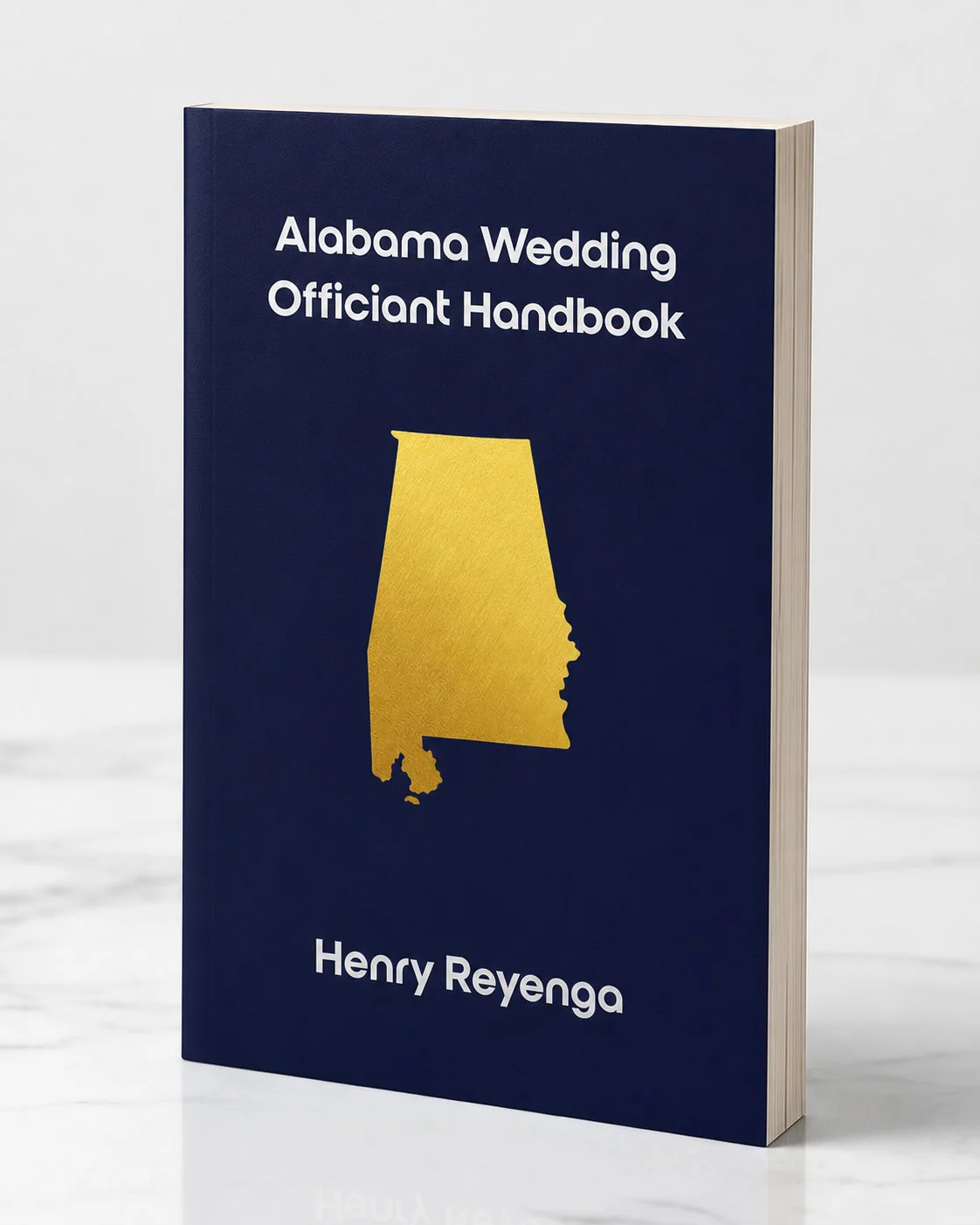
Alabama Wedding Officiant Handbook
Before officiating weddings in Alabama, it is important to understand the state’s marriage procedures and ministry expectations.
Understanding Alabama’s Marriage Certificate System
Alabama uses a marriage certificate system, which differs from most states.
Here is how it works in plain language:
The bride and groom complete a marriage certificate
The certificate is submitted to the county probate court
The marriage becomes legally valid when the certificate is recorded
Because of this system, a ceremony is not legally required. Still, many couples choose a Christian wedding ceremony for spiritual and biblical reasons.
In these moments, an ordained minister leads prayer, Scripture, vows, and blessing—serving as the spiritual shepherd of the covenant.
This makes ordination especially meaningful, as it helps ministers serve couples with both spiritual preparation and accountability.
Alabama Wedding Officiant Requirements Overview
If you are officiating a Christian ceremony in Alabama:
You should be ordained or authorized as a minister
No state officiant registration is required
Churches or venues may request proof of ordination
You may sign or affirm the marriage certificate
The completed certificate is returned per county instructions
You serve as the spiritual leader of the ceremony
Even when the law is simple, ministry requires preparation.
How to Become Ordained in Alabama
Step 1 — Complete the Wedding Officiant Skills Course
Through Christian Leaders Institute, you complete a practical, ministry-ready course that prepares you for real Alabama weddings, including:
Leading a Christ-centered ceremony rooted in Scripture
After completing the course, you may pursue ordination through Christian Leaders Alliance.
This pathway is:
Study-based, not instant
Biblically grounded, not transactional
Documentable when requested
Designed for volunteer and part-time ministers
For Alabama couples, this provides confidence that their officiant is spiritually prepared and accountable.
Step 3 — Local Endorsement for Community Trust
CLA ordination includes a local endorsement from someone other than yourself.
In Alabama’s close-knit communities, this matters. It signals that:
You are known, not self-appointed
You serve with accountability
You are trusted within the body of Christ
Learn More About Christian Wedding Officiant Ordination
To understand the full meaning of study-based Christian wedding officiant ordination, including formation, accountability, and long-term ministry vision, continue here:
Many online ordination organizations offer instant credentials with little or no ministry preparation. Christian Leaders Alliance follows a different approach that combines free, donor-supported ministry training with study-based ordination and accountability.
The pathway emphasizes:
Biblical ministry preparation
Practical wedding officiant training
Local endorsement and accountability
Publicly verifiable credentials
Ongoing ministry development
Free, Study-Based, and Donor Supported
Because of donor support, students can access training through Christian Leaders Institute without traditional tuition costs. Free does not mean instant or automatic. Participants complete coursework and ordination requirements designed to prepare them for real-world Christian ministry service.
Through Christian Leaders Institute, students receive study-based training, and through Christian Leaders Alliance, qualified graduates may pursue ordination recognition and ministry credentials.
The goal is not simply to provide paperwork, but to equip Christian leaders for meaningful ministry.
“Let all things be done decently and in order.” — 1 Corinthians 14:40 (WEB)
How the Christian Leaders Ecosystem Works Together
The Christian Wedding Officiant Credentialing & Study-Based Ordination Center is supported by a clear, trusted ecosystem—each part serving a distinct role:
Together, this pathway is designed to be accessible for biblical Christians and credible for real-world ministry service.
Lauren’s Story: An Ordination Testimony from Alabama
My name is Lauren James, and I’m from a small town in North Alabama. I have been with the love of my life for 10 years, and he supports me every step of the way in this ministry journey. He is also growing in ministry as he heeds the call of the Father for his life. Our hearts are focused on mission work right now, and we have had the opportunity to join a mission team that travels to Honduras annually. We are loving this experience—so much so that we are learning to speak Spanish! I am excited to see where the Lord will lead us and to have opportunities to minister and serve on foreign soil.
I preach and teach, and I also serve in a jail ministry at our church. We are a small, non-denominational congregation that believes in the full work of the gifts of the Holy Spirit. While our services have structure, we always allow the Holy Spirit to move freely. I preach under the power and anointing of the Living God as I yield myself fully to Him.
The training I’ve received from CLI has been an incredible tool in preparing for that future step. Through these courses, I have gained invaluable knowledge and wisdom, and I plan to encourage my future church leaders to take these classes as well. The fact that CLI offers these classes for free is such a blessing. It was especially vital in my case because I couldn’t afford to pay for classes when I first signed up. Initially, I didn’t join CLI to pursue ordination, but after a few courses, I realized I wanted to pursue it through this program. I firmly believe that the Lord has brought together an incredible team of ministers at CLI to raise up Christian leaders worldwide. The doctrine taught here is sound, and I have incorporated much of it into our Sunday School classes.
I wholeheartedly support this ministry program. I love studying the Bible and have a deep desire to gain more insight into the Scriptures. I am thrilled to be working toward my ordination, starting with the Wedding Officiant program through CLI. I look forward to taking even more classes to grow in wisdom, knowledge, and understanding. Praise the Lord for the leaders who have stepped up to train others for ministry!
I know He is the final authority in all things, and I take very seriously the fact that I will give an account for every word I speak one day. From a young age, I knew I was called into ministry and have always held that dream close to my heart. My husband and I firmly believe that we will pastor a church together someday.
Christian Leaders Student Story Tad: Answering His Niece’s Invitation to Officiate Her Wedding When Tad’s niece asked him to officiate her wedding, he wanted to do more than simply obtain a quick credential. He began looking for Christian preparation that would help him approach the ceremony with faith, understanding, and purpose. Tad Christian Leaders student […]
Christian Leaders Student Story Timothy Bunch: From a Wedding Invitation to Christian Wedding Ministry After a lifetime shaped by Christian faith, military service, law enforcement, family, and local church involvement, Timothy Bunch discovered a new ministry opportunity when a friend asked him to officiate a wedding. Timothy Bunch Christian Leaders student and wedding officiant A […]
Christian Leaders Student Story Timothy Martinez: Growing in Knowledge and Service Through Christian Ordination For Timothy Martinez of Somers Point, New Jersey, the Minister Ordination process became an important part of a continuing journey of Christian leadership, ministry preparation, and service to God and his community. Timothy Martinez Christian Leaders student and ministry leader in […]
Why Many Christians Pursue Ordination in Alabama
Many people seek ordination in Alabama because they have been asked to officiate a wedding for a friend, family member, church member, or someone within their community. What begins as a desire to serve one couple often develops into a broader ministry calling.
Christian ordination is not simply about conducting a ceremony. It represents a commitment to biblical ministry, spiritual leadership, and serving others with integrity and accountability.
For many Alabama ministers, wedding officiant service becomes a meaningful way to help couples begin their marriage with prayer, Scripture, and Christ-centered guidance.
Study-Based Wedding Officiant Preparation
Christian Leaders Alliance encourages a study-based approach to ordination rather than instant credentials without preparation.
Through Christian Leaders Institute, future wedding officiants can complete ministry training that covers wedding ceremony leadership, pastoral communication, biblical marriage principles, and practical officiant skills.
This preparation helps ministers serve couples with confidence while honoring the significance of the marriage covenant.
Serving Couples Throughout Alabama
Throughout Alabama, many couples continue to seek Christian wedding ceremonies that reflect their faith, values, and commitment to biblical marriage.
An ordained wedding officiant often provides:
Scripture readings and prayer
Wedding ceremony leadership
Guidance through vows and ring exchanges
Marriage encouragement and support
A Christ-centered perspective on covenant marriage
For many couples, these spiritual elements remain an important part of their wedding day.
Continue Your Ordination Journey
While many people begin with wedding officiant training, some continue into additional ministry opportunities such as chaplaincy, church leadership, discipleship, community ministry, and pastoral service.
Christian Leaders Institute provides free, donor-supported ministry training that helps prepare men and women for Christian service. Many students begin their journey with foundational ministry courses before pursuing ordination through Christian Leaders Alliance.
Christian Leaders Alliance provides a study-based pathway to ordination that emphasizes biblical preparation, local affirmation, ministry accountability, and ongoing Christian leadership development.
Those seeking information about ordination requirements in other states can also review the United States Ordination Guide.
If you are exploring how to become ordained in Alabama, wedding officiant ministry can be an excellent place to begin your journey of serving others in Christ’s name.