
Wedding Officiant Ordination | Study-Based Program

Begin Your Journey Here

Wedding Officiant Skills and Ordination

One Module • One-Credit Foundational Course • Estimated Two to Five Hours

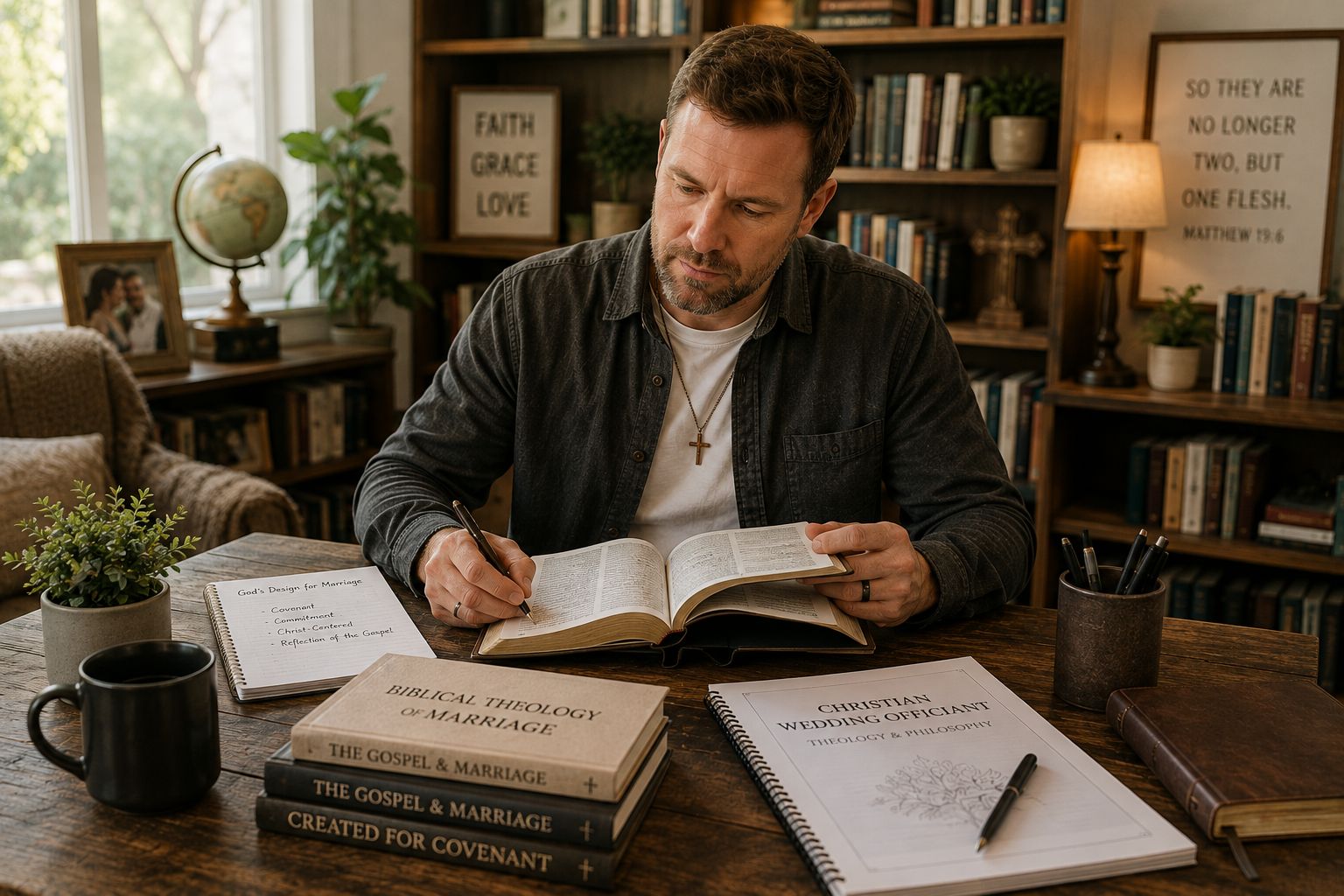
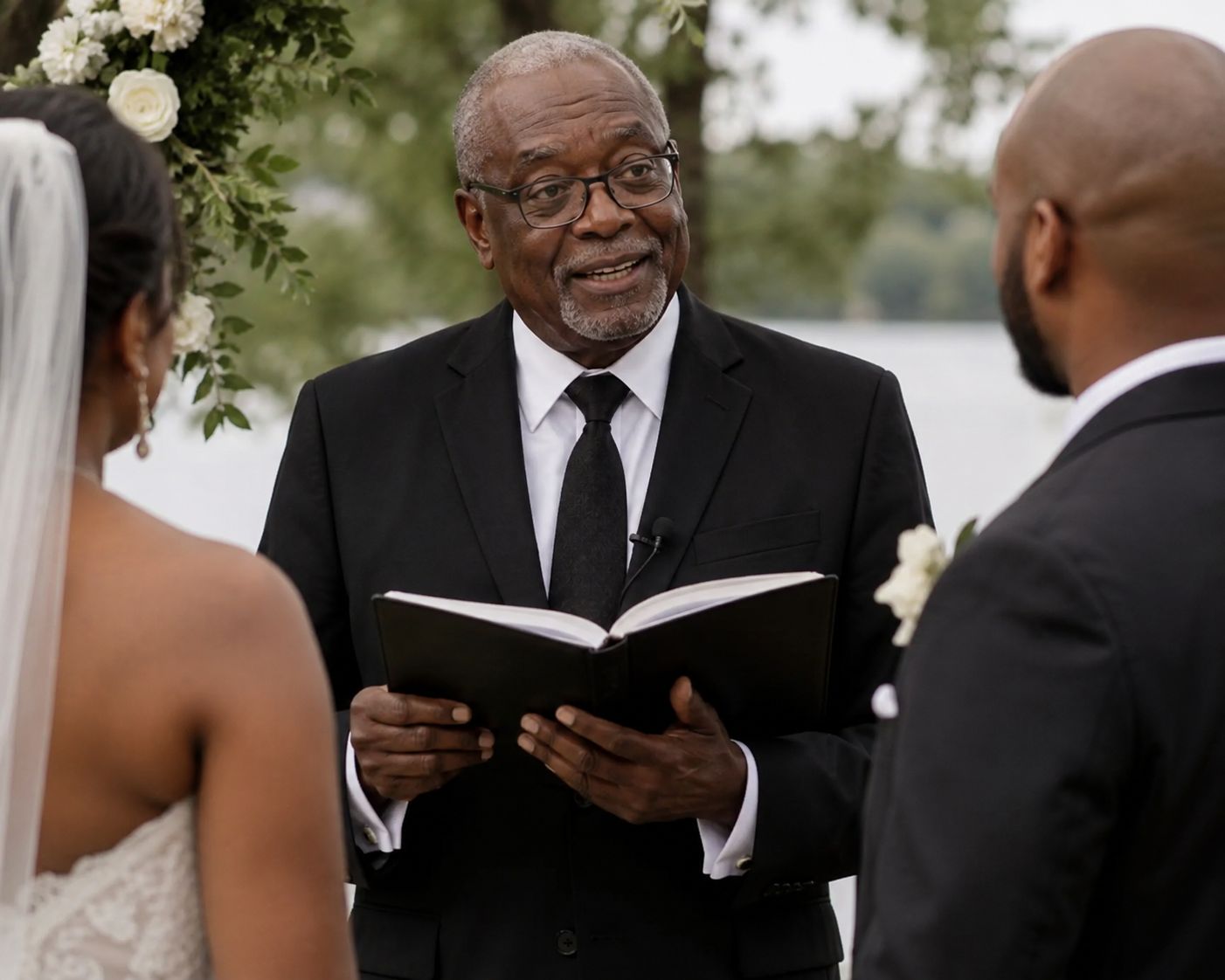
Christian wedding officiant preparing to lead a wedding ceremony through Wedding Officiant Ordination training

Wedding Officiant Skills and Ordination

The Wedding Officiant Skills and Ordination course is the starting point for Christians preparing to officiate weddings. You will learn how to approach a wedding as both a sacred Christian covenant moment and a serious public responsibility.

Credential Earned After Completing Current Requirements

Ordained Christian Wedding Officiant

Who This Foundational Course Is Designed For

This course supports Christians entering wedding ministry from several different starting points.

  • A friend or family member asked to officiate a wedding
  • A church leader who needs recognized wedding-officiant standing
  • A Christian volunteer who wants to serve couples
  • An existing minister seeking focused ceremony preparation
  • A leader exploring an ongoing wedding ministry
  • A person who may later pursue broader minister ordination

Prepare for the Complete Wedding-Ceremony Journey

The course takes you from the first meeting with the bride and groom through premarital ministry, legal research, rehearsal leadership, ceremony preparation, the wedding message, post-ceremony responsibilities, and the completion of your Wedding Officiant Ordination pathway.

Study Is Followed by Christian Recognition

Completing the study component does not automatically constitute ordination. Students pursuing Wedding Officiant Ordination through Christian Leaders Alliance also complete the applicable recognition steps and submit one endorsement from someone who knows their Christian faith, character, and calling.

Current Course Coverage

The current course includes biblical marriage foundations, legal research, the first couple meeting, premarital ministry, ceremony preparation, rehearsal leadership, the wedding message, and ordination-completion steps.

Begin Your Wedding Officiant Ordination Preparation

Begin Wedding Officiant Skills and Ordination

Create a free Christian Leaders Institute study account and begin online.

Additional Advanced Wedding Officiant Training

Foundational ordination prepares you to begin. Advanced training helps you grow in ceremony design, difficult wedding situations, marriage ministry, public credibility, and theological depth.

Some leaders will officiate one wedding. Others will discover that wedding ministry becomes an ongoing calling. Christian Leaders Institute offers an expanding wedding-officiant curriculum for both.

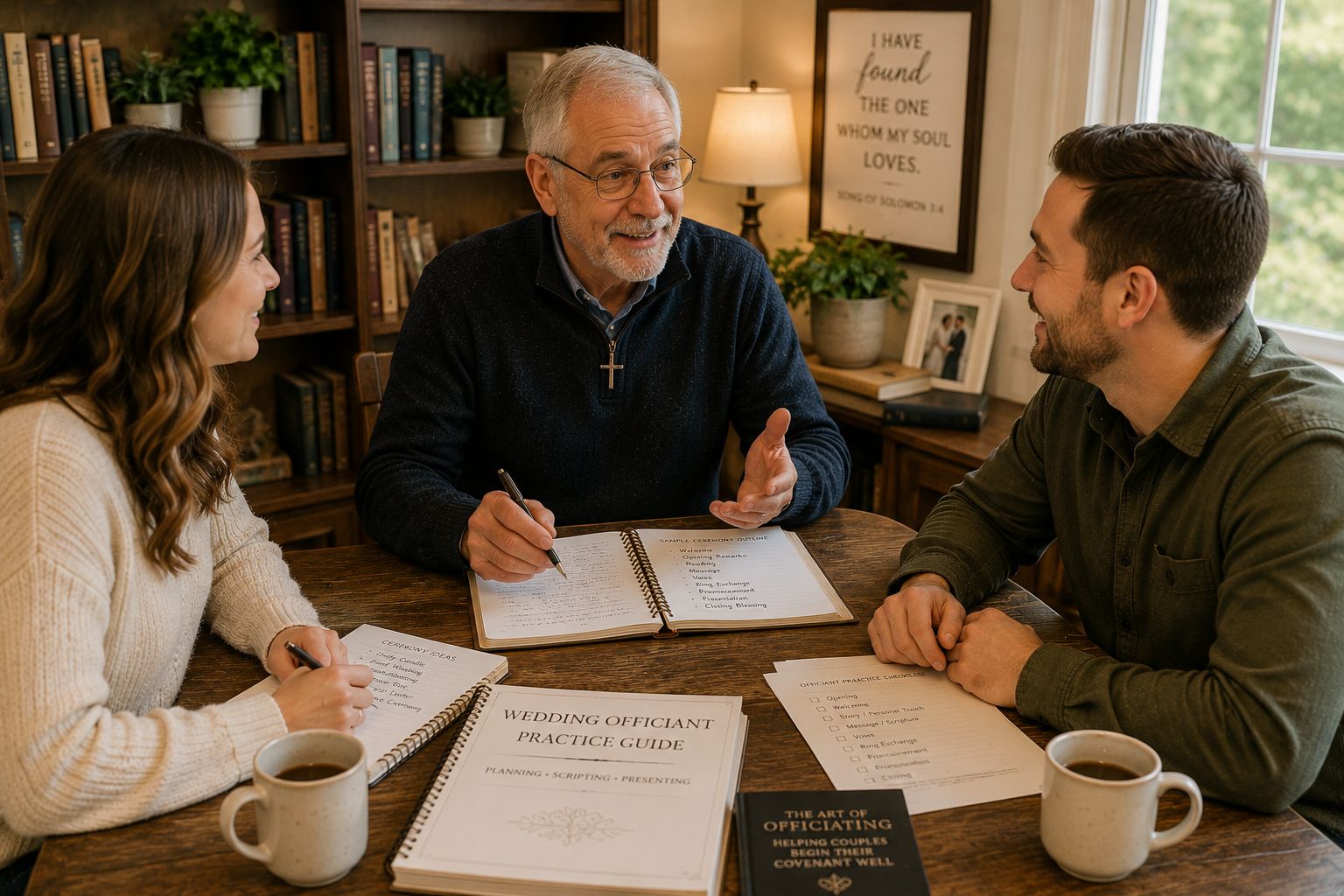
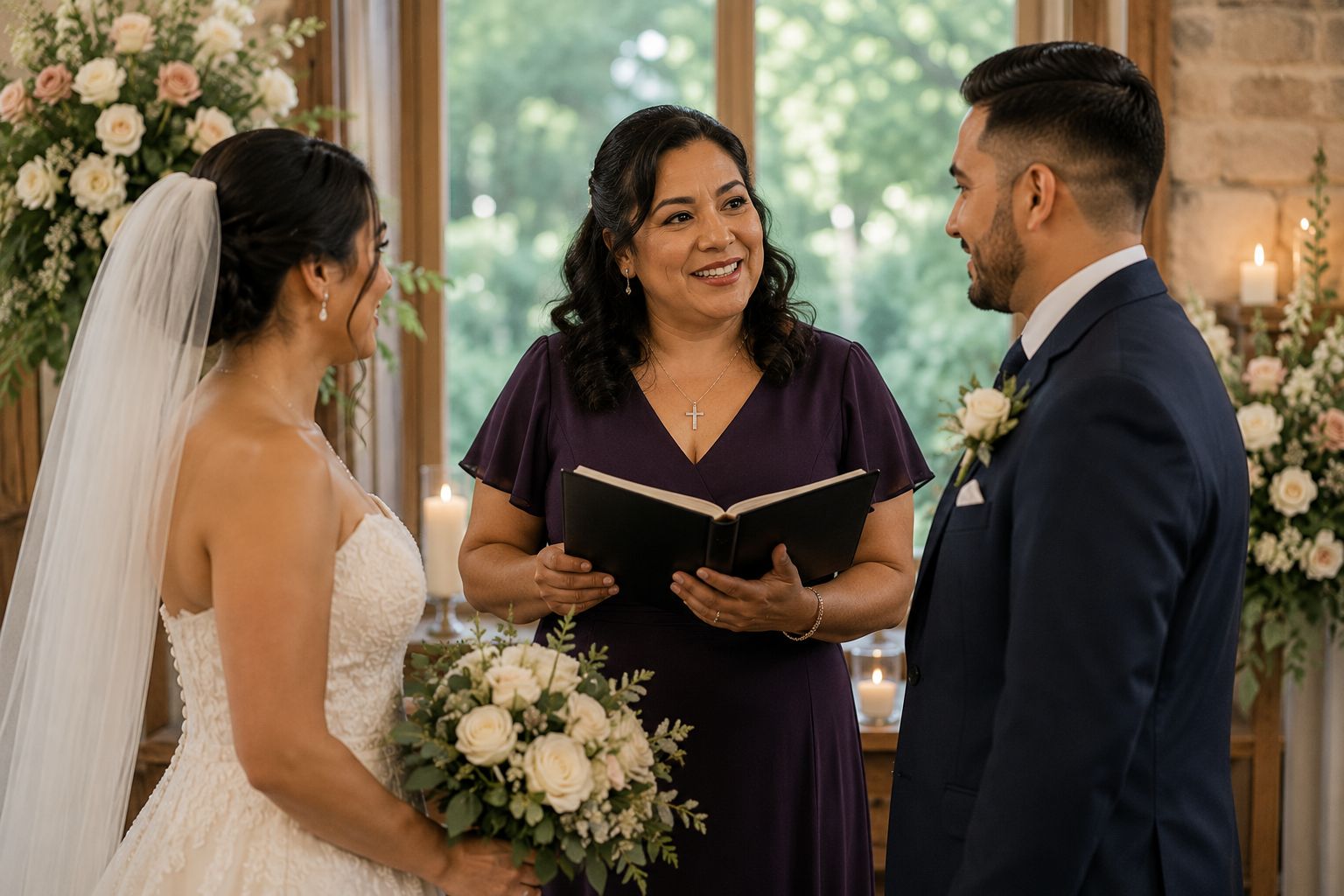
Christian wedding officiant meeting with a couple during advanced wedding ceremony design training

Covenant Ceremony Design Lab

Learn to create personalized Christian wedding ceremonies that remain rooted in covenant, Scripture, prayer, and the meaning of marriage.

This practical design lab helps you thoughtfully incorporate the bride and groom’s story, Scripture readings, prayers and blessings, traditional and personally written vows, ring exchanges, Christian symbols, family participation, cultural or congregational traditions, ceremony transitions, and a clear and meaningful declaration of marriage.

The goal is not novelty for its own sake. The goal is a warm, beautiful, biblically grounded ceremony that reflects the couple’s story while preserving the integrity of Christian marriage.
Experienced Christian wedding officiant guiding a couple through advanced wedding ministry preparation

Advanced Wedding Officiant Ministry

Develop the judgment, confidence, and pastoral presence needed for increasingly complex wedding situations.

This course is especially suited to ordained wedding officiants who want to remain focused on excellent ceremony ministry. It addresses complicated family relationships, nontraditional venues, conflicting expectations, ceremony disruptions, doctrinal questions, unusual requests, and heightened emotional pressure.

The Advanced Wedding Officiant remains primarily focused on wedding preparation, rehearsal leadership, ceremony excellence, boundaries, and the wise care of the bride and groom.

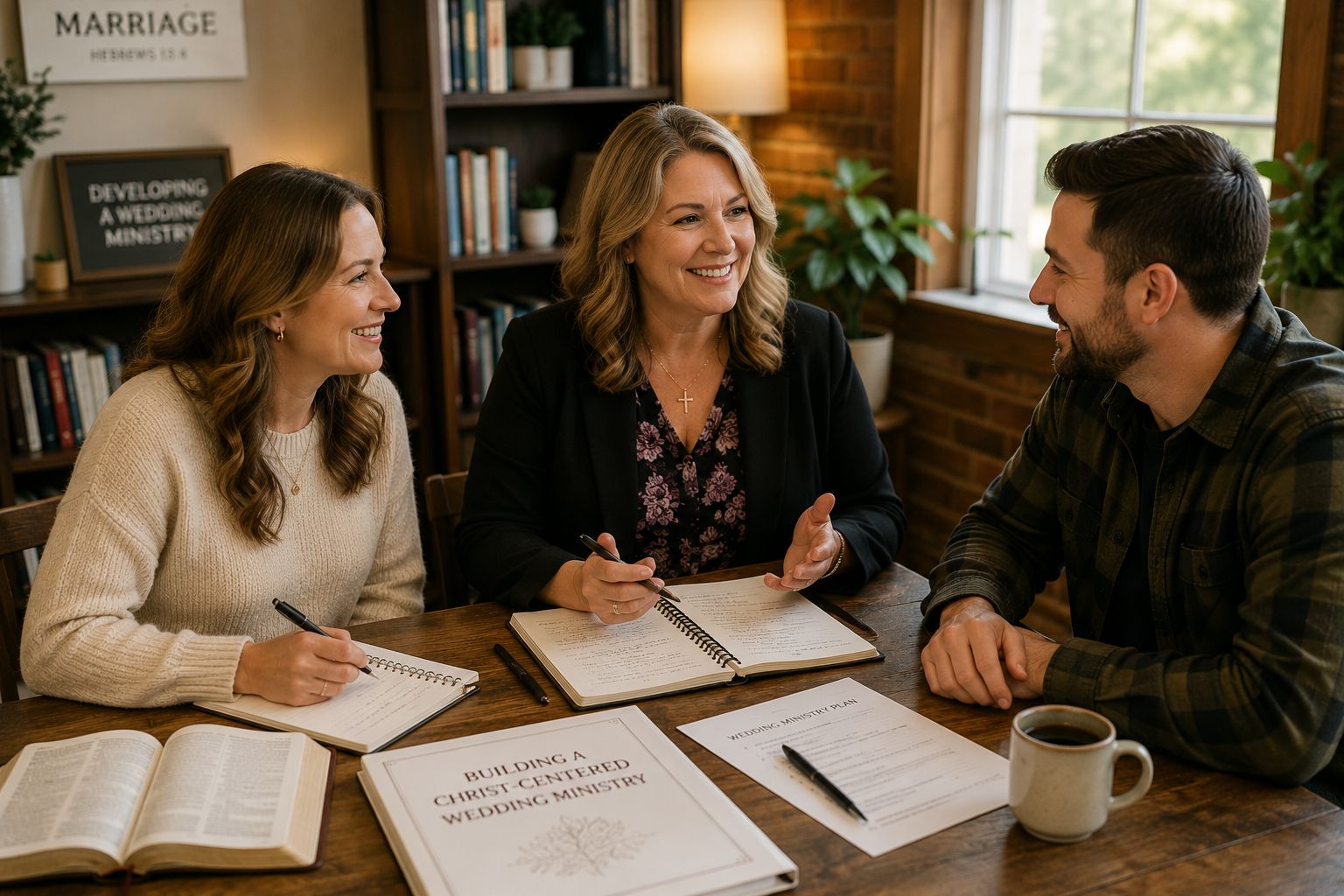
Christian wedding officiant developing a trustworthy local wedding ministry with a couple

Developing a Wedding Ministry

Move from performing occasional ceremonies to developing a trustworthy, covenant-centered wedding ministry.

Explore how to create a clear ministry identity, communicate with couples, develop an intake process, establish ethical policies, organize ceremony preparation, build community relationships, present your services with integrity, and cultivate a ministry that blesses couples beyond a single wedding day.

This course can help church leaders, Soul Center leaders, ministry entrepreneurs, and experienced officiants build a faithful local presence without reducing marriage ministry to a commercial transaction.

Christian wedding minister providing premarital preparation and marriage ministry to a couple

Wedding Minister Training

The Wedding Minister role goes beyond ceremony competence into deeper marriage ministry.

This pathway is designed for leaders called to provide premarital preparation, Christian marriage formation, couple encouragement, spiritual conversations, healthy referral practices, marriage-enrichment ministry, post-wedding follow-up, and connections to churches, coaches, chaplains, or qualified counselors.

An Advanced Wedding Officiant develops higher ceremony competence. A Wedding Minister develops a broader ministry of covenant preparation, couple care, and marriage formation.

Christian wedding officiant studying biblical theology and the philosophy of Christian marriage

Christian Wedding Officiant Theology and Philosophy

Understand why Christian wedding ministry matters.

This course explores the biblical, theological, philosophical, pastoral, historical, and public meaning of marriage. It equips officiants to understand the bride and groom as whole persons before God and marriage as more than a romantic celebration or government contract.

Students explore marriage through creation, the fall into sin, redemption in Christ, covenant, embodiment, Christian ethics, public responsibility, and the calling of the officiant as a minister-servant.

Christian romance officiant developing relational and personalized wedding ceremony skills with a couple

Romance Officiant Skills Course

Develop relational and ceremonial skills for creating warm, meaningful, and personally attentive relational experiences.

This course helps officiants strengthen communication with couples, understand the importance of romance and personal connection, and thoughtfully reflect each couple’s story within the ceremony.

Grow in emotional awareness, ceremony personalization, couple care, and appropriate ministry boundaries while preserving the dignity and Christian meaning of the wedding celebration.

These advanced offerings form a coherent progression from ceremony design to advanced officiating, wedding-ministry development, wedding-minister formation, relational officiant skills, and deeper Christian theology and philosophy.

From One Ceremony to Ongoing Christian Ministry

From One Wedding to Your Own Soul Center

Developing a Wedding Officiant Practice in Your Community

A request to officiate one wedding may become the beginning of a meaningful local ministry. Explore how to establish a recognizable Christian wedding ministry that serves couples, supports marriages, builds community relationships, and creates opportunities for Christian witness.

Christian wedding officiant developing a local Wedding Officiant Practice and Soul Center ministry Local Wedding Ministry

Serve Couples and Strengthen Marriages

Build a trusted local ministry around Christian wedding preparation, ceremonies, and ongoing couple care.

Develop a Wedding Officiant Practice in Your Community

Through Developing a Wedding Officiant Practice in Your Community, you can explore how to establish a recognizable Christian wedding ministry that serves couples, supports marriages, builds community relationships, and creates opportunities for Christian witness.

Your wedding ministry might include:

  • Christian wedding ceremonies
  • Couple-intake meetings
  • Ceremony planning
  • Premarital encouragement
  • Wedding rehearsals
  • Vow-renewal ceremonies
  • Marriage-enrichment events
  • Referrals to churches and qualified care providers
  • Follow-up with newly married couples
  • Partnerships with venues, photographers, planners, churches, and community leaders

After receiving an eligible Christian Leaders Alliance credential, remaining in good standing, and completing current registration requirements, you may also pursue registration of your wedding ministry as a Christian Soul Center.

Optional Christian Soul Center Registration

A Soul Center can provide a recognized local or online ministry expression through which you serve couples and families. It can connect to a local church, operate as a specialized marriage ministry, function as a hybrid or online ministry, or become part of a broader community ministry.

Soul Center registration does not automatically create a business entity, tax exemption, counseling license, or civil authority to solemnize marriages. Legal, financial, professional, licensing, and administrative matters must be addressed separately according to the requirements that apply in your location and ministry setting.
Your First Wedding May Be One Faithful Act— or the Beginning of a Lifetime of Marriage Ministry.

Preparation for a Sacred and Public Responsibility

A Study-Based Pathway into Wedding Officiating

Wedding officiating often begins with a beautiful and unexpected invitation. Christian Leaders Alliance helps turn that personal invitation into thoughtful preparation, accountable recognition, and faithful service to the bride and groom.

The Question That Begins the Journey

“Would You Officiate Our Wedding?”

The person asking may be your daughter, son, sibling, niece, nephew, friend, church member, or ministry colleague.

The invitation is deeply personal, but accepting it also brings responsibilities that extend beyond standing at the front of a ceremony.

Wedding officiating carries spiritual, relational, ceremonial, public, and legal responsibilities.

Questions You May Suddenly Be Asking

How Do I Prepare to Serve the Bride and Groom Well?

  • Can I legally officiate the wedding?
  • How do I become ordained?
  • What should I say during the ceremony?
  • How do I write a wedding message?
  • What do I do with the marriage license?
  • How should I lead the rehearsal?
  • How do I honor the bride and groom’s story?
  • What makes a wedding ceremony genuinely Christian?
  • What happens when the family or couple requests something difficult?
  • Where can I receive credentials that reflect real preparation?

More Than Completing an Online Form

A Credible Path from Invitation to Wedding Ministry

Christian Leaders Alliance offers a pathway that begins with learning, reflection, and preparation rather than merely claiming a title.

01

Study

Learn biblical marriage foundations, ceremony preparation, rehearsal leadership, legal research, and the responsibilities of a Christian wedding officiant.

02

Reflect

Consider your calling, character, readiness, ministry boundaries, and responsibility to serve the bride and groom with wisdom and care.

03

Complete Assessments

Demonstrate understanding of the biblical, practical, ceremonial, relational, and legal preparation included in the course.

04

Receive Local Endorsement

Invite a Christian who knows your faith, character, and calling to affirm your readiness to pursue Wedding Officiant Ordination.

05

Pursue Ecclesiastical Recognition

Complete the applicable Christian Leaders Alliance recognition requirements connected to the Ordained Christian Wedding Officiant credential.

06

Verify and Serve

Confirm the legal requirements that apply where the wedding will occur, then serve with greater clarity, competence, confidence, and accountability.

You study. You reflect. You complete assessments. You receive local endorsement. You pursue ecclesiastical recognition. You verify local legal requirements. You then serve the bride and groom with greater clarity, confidence, competence, and accountability.
Accessible Online Ordination Process—  Not Instant-Only Ordination.

Calling, Preparation, and Christian Recognition

What Is Wedding Officiant Ordination?

Wedding officiant ordination is the formal ecclesiastical recognition of a Christian leader who has completed appropriate preparation and is called to officiate wedding ceremonies as a ministry role.

What Christian Leaders Alliance Recognizes

Preparation for Faithful Christian Wedding Ministry

Through Christian Leaders Alliance, Wedding Officiant Ordination recognizes that the candidate has pursued meaningful preparation, Christian affirmation, and accountable ministry standing.

The recognition process includes:

  • Christian wedding-officiant training
  • Biblical understanding of marriage
  • Practical ceremony preparation
  • Legal-awareness training
  • Local endorsement
  • Ministry accountability
  • Continued good standing

An Important Distinction

Ecclesiastical Recognition Is Not the Same as Civil or Professional Licensing

  • Not a government-issued occupational license
  • Not an academic degree
  • Not a clinical counseling license
  • Not a universal guarantee of civil authority

Ministry Identity, Responsibility, and Boundaries

Understanding Christian Wedding Officiating

Christian wedding officiating is a meaningful ministry practice with spiritual, relational, ceremonial, ethical, legal, and administrative responsibilities. Understanding both its purpose and its boundaries helps officiants serve couples faithfully.

Faithful Ministry Practice

What This Practice Is

  • A ministry of service to the bride and groom
  • A public witness to Christian marriage
  • A responsibility requiring preparation
  • A ministry of Scripture, prayer, vows, blessing, and covenant
  • A process of listening to and communicating with the couple
  • A practical responsibility involving timelines, rehearsals, and ceremony flow
  • A legal-administrative responsibility involving local requirements and the marriage license
  • An opportunity for premarital encouragement and appropriate referrals
  • A role practiced with ethical boundaries and confidentiality
  • A calling carried out with accountability and continued learning

Important Ministry Boundaries

What This Practice Is Not

  • A click-and-claim title without preparation
  • A universal legal guarantee that applies in every jurisdiction
  • A substitute for contacting the marriage-license authority
  • A license to practice law
  • A license to provide clinical counseling or mental-health treatment
  • Permission to ignore venue, church, denominational, or civil requirements
  • A promise of income or business success
  • An opportunity to pressure or control the bride and groom
  • A reason to accept ceremonies that violate your faith or conscience
  • The end of learning and accountability

More Than an Event Host

The Christian Wedding Officiant Is a Minister-Servant

A Christian wedding officiant is not merely an event host. The officiant is a minister-servant standing at the intersection of faith, family, community, covenant, celebration, and civil responsibility.

Christian Leaders Alliance does not teach that purchasing a certificate creates a calling. Training, endorsement, ecclesiastical recognition, character, legal diligence, accountability, and faithful service belong together.

Prepare Before You Stand Before the Wedding Gathering

Begin with Foundational Training

The wedding day is not the ideal time to discover that you do not know what comes next. Foundational Wedding Officiant Training gives you a practical and Christian framework before you stand in front of the bride, groom, family, and gathered community.

Understand More Than the Words You Will Say

The Wedding Officiant Skills and Ordination course gives you a practical framework before you stand in front of the wedding gathering.

It combines Christian foundations with real ceremony preparation. You will not merely receive sample words. You will understand why the words, promises, prayers, legal actions, and relationships matter.

Good preparation helps you lead with calm, clarity, confidence, and appropriate pastoral presence.

Biblical, Ceremonial, Relational, and Practical Preparation

This Course Equips You To:

Build the understanding and practical readiness needed to prepare for a Christian wedding ceremony and serve the bride and groom responsibly.

  • Understand the spiritual, ceremonial, and public role of a wedding officiant
  • Prepare for your first meeting with the bride and groom
  • Ask thoughtful questions and clarify expectations
  • Research state, county, provincial, or local marriage requirements
  • Explain the Christian meaning of marriage as covenant
  • Provide appropriate premarital encouragement while respecting professional limits
  • Create a clear and meaningful Christian wedding ceremony
  • Select and organize Scripture, prayers, vows, rings, and blessings
  • Prepare and deliver a concise wedding message
  • Conduct an organized wedding rehearsal
  • Lead the wedding ceremony calmly and confidently
  • Understand the officiant’s role concerning the marriage license
  • Respond wisely to common wedding complications
  • Establish healthy ministry boundaries
  • Discern whether God may be calling you into further wedding or clergy ministry

Study, Confirmation, and Ecclesiastical Recognition

Explore the Wedding Officiant Training Pathway

Christian Leaders Institute, Christian Leaders Alliance, and your local Christian community work together while serving different purposes within the Wedding Officiant Ordination pathway.

CLI

Christian Leaders Institute

Christian Leaders Institute provides the online study, biblical formation, practical preparation, and course assessments.

LC

Your Local Christian Community

Your local Christian community provides endorsement, confirmation, prayer, and personal affirmation of your faith, character, and calling.

CLA

Christian Leaders Alliance

Christian Leaders Alliance provides ecclesiastical recognition, minister standing, public credentialing, and ongoing accountability.

God Calls. CLI Trains. Community Confirms. CLA Recognizes.

The pathway is flexible enough for the person officiating one family wedding and substantial enough to become the beginning of an ongoing Christian wedding ministry.

Choose the Next Step That Matches Your Calling

Begin Exploring Your Pathway

Whether you are still comparing your options, ready to begin Wedding Officiant Ordination, or sensing a broader call into Christian ministry, you can choose the pathway that most closely matches the opportunity God has placed before you.

01

Explore Every Available Option

Wedding Officiant Overview Folder

See the complete wedding-officiant and specialized-officiant ecosystem in one place.

Explore foundational Wedding Officiant Ordination, ceremony design, advanced officiating, wedding-ministry development, Wedding Minister formation, Christian marriage theology, and related officiant pathways before selecting your next step.

Best For

Someone who wants to understand every available option before enrolling.

03

Continue into Broader Christian Ministry

Full Ordination Program

Continue into broader biblical, theological, pastoral, and ministry preparation.

Full ordination pathways are designed for leaders whose calling extends beyond wedding ceremonies into preaching, discipleship, pastoral care, church leadership, chaplaincy, coaching, community ministry, or other clergy responsibilities.

Best For

Someone who sees wedding officiating as one part of a broader Christian ministerial calling.

You do not need to understand your entire ministry future before beginning. Start with the pathway that matches the ministry opportunity presently before you, and allow your preparation, calling, and service to continue growing over time. Your first faithful step can lead to a lifetime of Christian ministry.

Preparation, Endorsement, Recognition, and Accountability

Pursue Ordination Recognition

Ordination Is Recognized, Not Purchased

Christian Leaders Alliance ordination is based on preparation, endorsement, ecclesiastical recognition, and continuing accountability—not merely on payment for a document.

01

Registration

Create Your Free Study Account

Register with Christian Leaders Institute and complete the applicable orientation process so you can access your courses, planner, and current program requirements.

02

Preparation

Complete Wedding Officiant Skills and Ordination

Work through the course videos, readings, resources, assignments, and assessments that provide biblical, ceremonial, relational, practical, and legal-awareness preparation.

03

Endorsement

Receive Level One Endorsement

Ask someone who knows your Christian faith, character, and calling to provide the required confidential reference or endorsement.

04

Completion

Complete the Recognition Requirements

Review your credential checklist and complete any required public profile, policy, affirmation, identity, and recognition steps shown in your Christian Leaders planner.

05

Ecclesiastical Recognition

Receive Christian Leaders Alliance Recognition

After completing the current requirements, you may be recognized as an Ordained Christian Wedding Officiant and become eligible for applicable Christian Leaders Alliance directory listings and credential resources.

06

Civil Compliance

Verify Your Local Civil Requirements

Contact the government office responsible for issuing marriage licenses where the ceremony will occur. Confirm:

07

Community Affirmation

Consider Local Commissioning

Invite your church, fellowship, Soul Center, ministry community, or another recognizing Christian community to pray over you and publicly affirm your calling to wedding ministry.

08

Continued Growth

Continue Growing

Pursue advanced wedding-officiant training, develop a wedding ministry, register an eligible Christian Soul Center, or continue toward a broader minister role as your calling develops.

Your Focused Wedding Ministry Pathway

Pursue Recognition as an Ordained Christian Wedding Officiant

Begin with tuition-free online study, complete the current endorsement and recognition requirements, verify the laws where you will serve, and prepare to officiate with Christian conviction, competence, confidence, and accountability.

Accessible Christian Ministry Preparation

Free to Participate. Study-Based. Donor-Supported.

Christian Leaders Institute provides tuition-free access to foundational Wedding Officiant Training so that Christian leaders can prepare for ministry regardless of income or location.

No Required Tuition

Tuition-Free Training Access

You are not required to make a donation or pay tuition to access the foundational Wedding Officiant Training.

This makes ministry preparation available to people from a wide variety of financial, geographic, church, and community settings.

Sustained Through Generosity

Donor-Supported Access

This model is sustained by donors, students, graduates, churches, and Christian leaders who believe ministry education should be accessible regardless of income or location.

Those who are able to contribute help make the same opportunity available to future students.

Meaningful Participation

Study-Based Preparation

Tuition-free access does not remove the responsibility to study, reflect, complete assessments, receive endorsement, and fulfill current recognition requirements.

The pathway remains accessible while still requiring real preparation and accountable participation.

What Participation Requires

Free Access Still Includes Real Preparation

Students participate in a structured learning and recognition process before receiving the applicable Wedding Officiant Ordination recognition.

  • Complete the assigned learning activities
  • Work through course videos and readings
  • Complete applicable assessments
  • Receive the required local endorsement
  • Complete current recognition requirements
  • Maintain appropriate Christian ministry standing

Available Without Required Tuition

Foundational Training and Participation

Christian Leaders Institute provides tuition-free access to the foundational Wedding Officiant Training and its learning activities.

A donation is not required to begin or complete the training.

Available After Program Completion

Printed Credentials and Ordination Kits

Official credentials, identification resources, and ordination kits are available to those who complete the program.

Purchasing a resource does not replace study, endorsement, recognition, legal diligence, or continued good standing.

Free Access Does Not Mean Empty Preparation.

The foundational course is tuition-free, while printed credentials and ministry-recognition packages are optional resources available following qualification. Preparation, endorsement, ecclesiastical recognition, legal diligence, and accountability remain essential parts of the pathway.

Transparent Education and Ecclesiastical Recognition

Accreditation and Educational Integrity

Christian Leaders Institute and Christian Leaders Alliance work together within this pathway, but they provide distinct forms of preparation and recognition.

Educational Training

Christian Leaders Institute

Christian Leaders Institute provides the educational training connected to the Wedding Officiant Ordination pathway, including online lessons, readings, ministry resources, learning activities, and course assessments.

Primary Role

Christian Leaders Institute provides the study and ministry preparation.

Ecclesiastical Recognition

Christian Leaders Alliance

Christian Leaders Alliance provides the ecclesiastical ordination recognition connected to the pathway, including Christian ministry standing, applicable directory recognition, credential resources, and ongoing accountability.

Primary Role

Christian Leaders Alliance provides ecclesiastical recognition and minister accountability.

Transparency Is Part of Educational Integrity

Understand the Training, Recognition, and Institutional Standing

These distinctions matter. Educational integrity includes being transparent about what the training and ordination accomplish, what type of recognition they represent, and what legal or professional authority they do not independently provide.

Real Preparation for Meaningful Christian Service

Grow as a Servant Leader

Wedding Officiant Ordination is not primarily about status. It is about becoming better prepared to serve God, the bride and groom, their families, and the gathered community with Christian conviction, competence, and care.

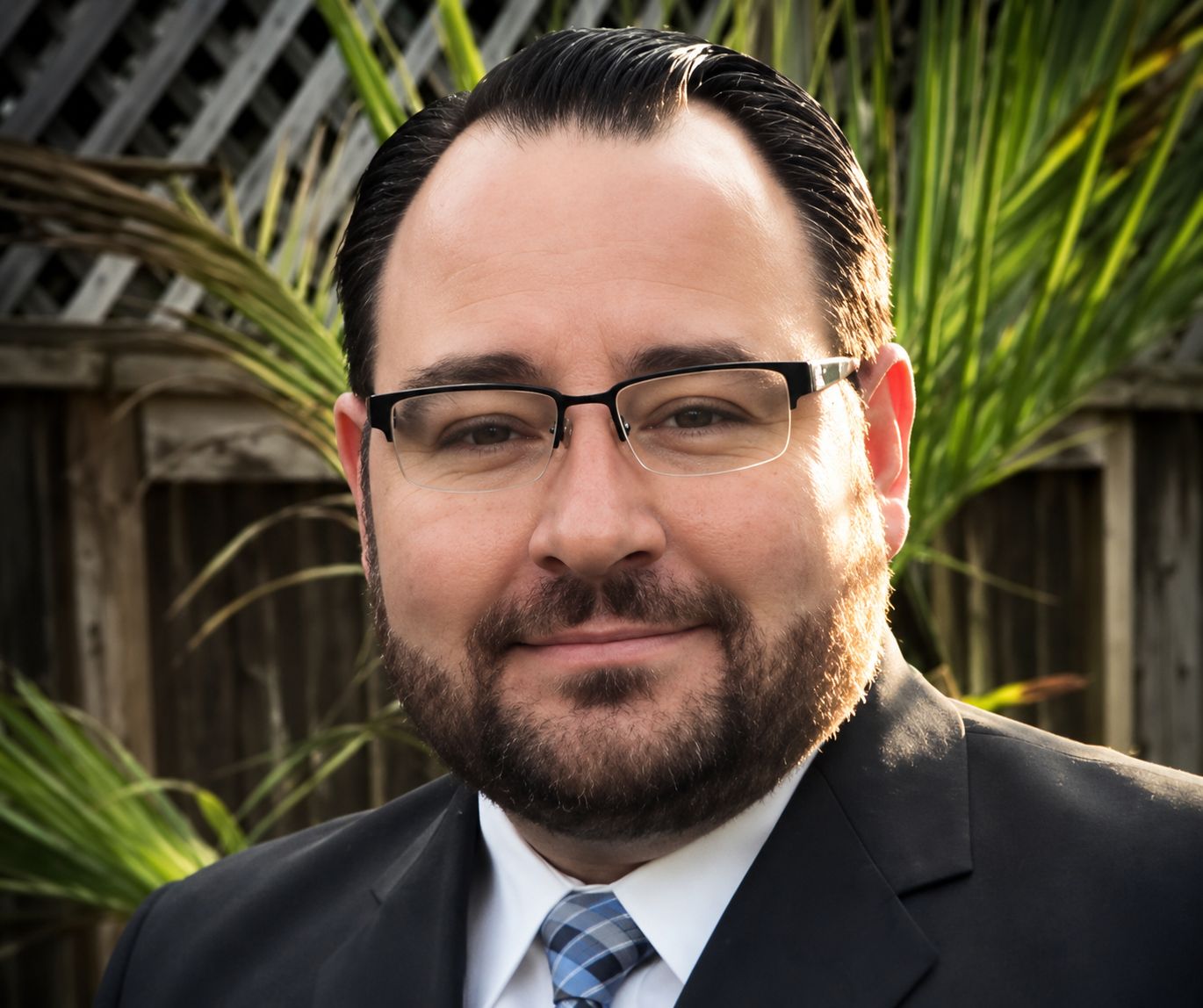
Stephen Kennedy, Christian wedding officiant

Wedding Officiant Testimony

Stephen Kennedy

Training That Felt Real

When Stephen’s nephew asked him to officiate his wedding, Stephen first tried an instant-ordination site. He remained unsettled because the organization did not know his faith, character, or preparation. He then found Christian Leaders Institute and Christian Leaders Alliance.

“The training felt real… precisely what I needed.”

Stephen’s experience shows why study and accountability matter when someone you love asks you to lead one of life’s most meaningful ceremonies.

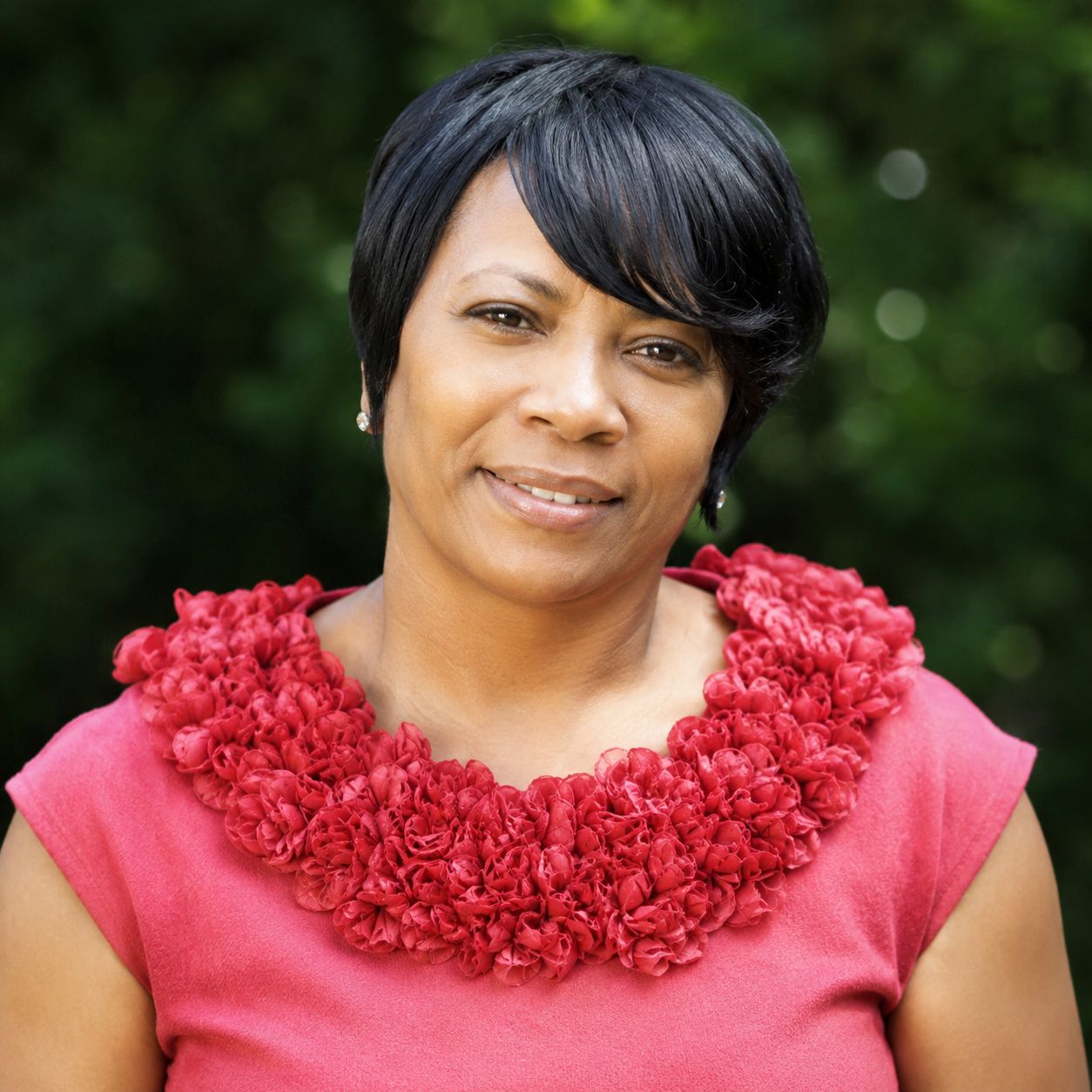
Diane Jones, Christian wedding officiant

Wedding Officiant Testimony

Diane Jones

Greater Knowledge and Confidence

Diane had already served in her church’s wedding-services ministry. She wanted focused preparation that would help her guide couples in the biblical meaning of marriage rather than simply manage wedding details.

“The coursework has given me greater knowledge and confidence.”

Her Wedding Officiant journey became part of a wider discovery of Christian calling and ministry formation.

George Alvarado, Christian wedding officiant

Wedding Officiant Testimony

George Alvarado

Serving Couples and Honoring God

George’s ministry calling developed through evangelism, Bible study, and Christian service. Wedding Officiant Training gave him another way to serve people at a significant covenant moment.

“It allows me to serve couples and honor God through their ceremonies.”

His story demonstrates how wedding ministry can unite public service, biblical conviction, and pastoral care.

Jeremy Algozzine, Christian wedding officiant

Wedding Officiant Testimony

Jeremy Algozzine

Truly Learning, Not Merely Completing a Requirement

When Jeremy’s brother asked him to officiate his wedding, Jeremy wanted a pathway grounded in a Christian view of marriage. He discovered that his preparation became more than satisfying a requirement.

“I found myself truly learning rather than just completing a requirement.”

Jeremy’s experience reflects the difference between receiving a fast title and entering a genuine process of preparation.

Ordination Is About  Faithful Service.

These Christian leaders began with different experiences and ministry backgrounds, but each discovered that meaningful Wedding Officiant preparation involved more than receiving a title.  Study, Christian conviction, accountability, and a desire to serve couples well shaped their journeys.

Recognition Resources for Qualified Leaders

Official Credentials & Ordination Kits

After completing the applicable Wedding Officiant Ordination requirements, qualified leaders may choose from official Christian Wedding Officiant recognition kits.

Physical credentials can help document your ministry standing to couples, venues, churches, and civil offices that request evidence. They also provide a meaningful way to recognize the completion of your ordination pathway.

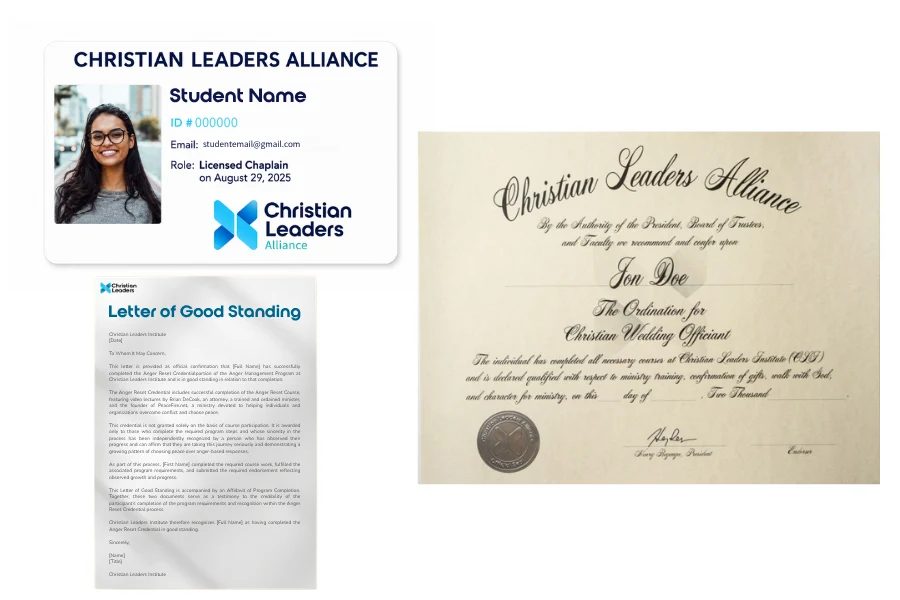
Wedding officiant ordination Basics Kit with official Christian ministry credentials

Foundational Recognition Option

Christian Wedding Officiant Kit — Basics

A foundational recognition option for newly ordained Christian Wedding Officiants.

Designed for leaders who want core documentation as they prepare to officiate a first wedding or begin serving family members, friends, church members, and couples in their community.

Best For

Newly ordained leaders who want essential recognition credentials for a first wedding or the beginning of a local ministry.

See Current Price, Formats & Kit Contents
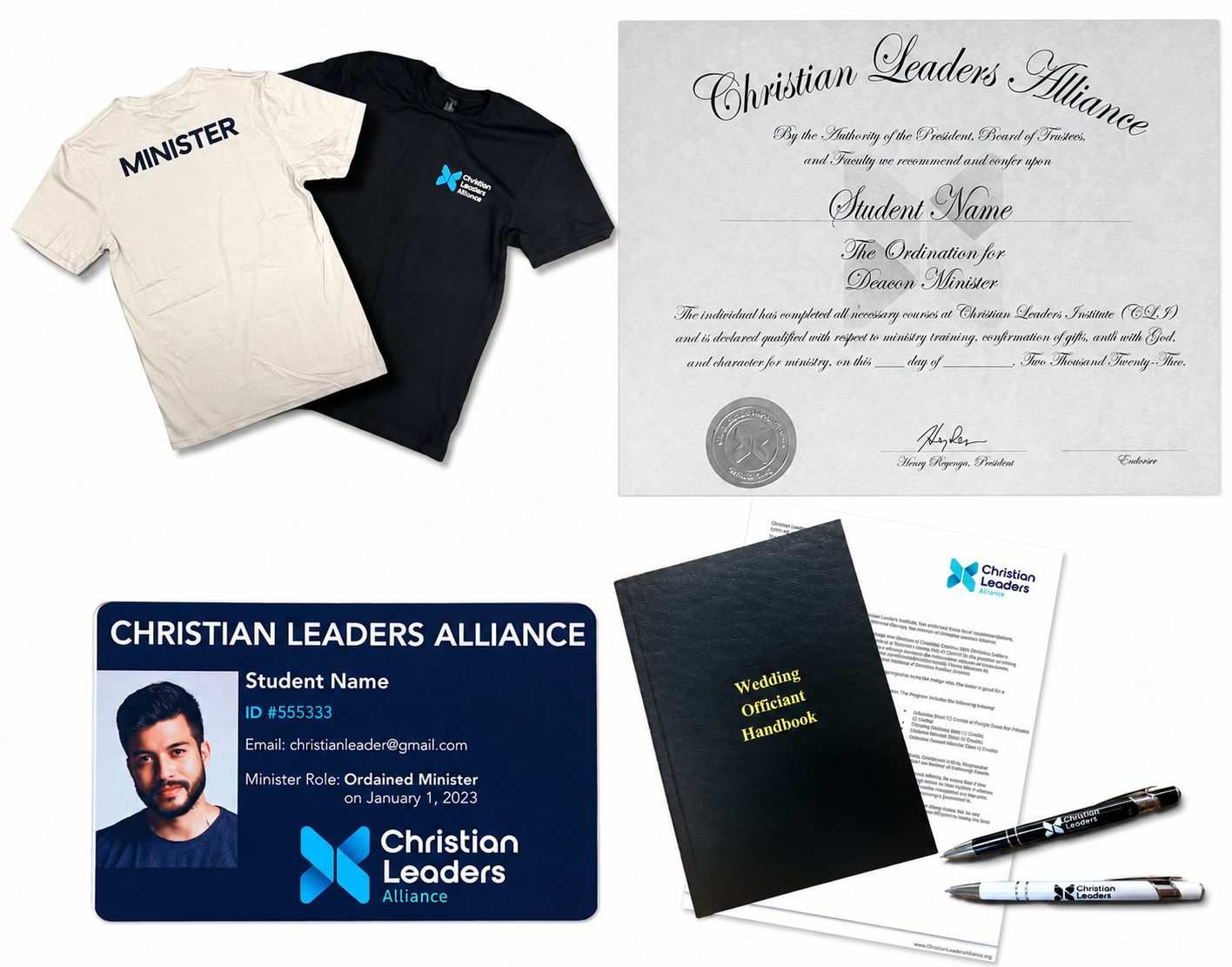
Wedding officiant ordination Essential Kit with official credentials and ministry resources

Practical Credential Collection

Christian Wedding Officiant Kit — Essential

A practical collection of official credentials and wedding-ministry resources.

This kit is designed for officiants who want the central recognition documents together with useful ceremony and Christian ministry tools.

Best For

Wedding officiants who want a balanced collection of official credentials and practical resources for serving couples.

See Current Price, Options & Kit Contents
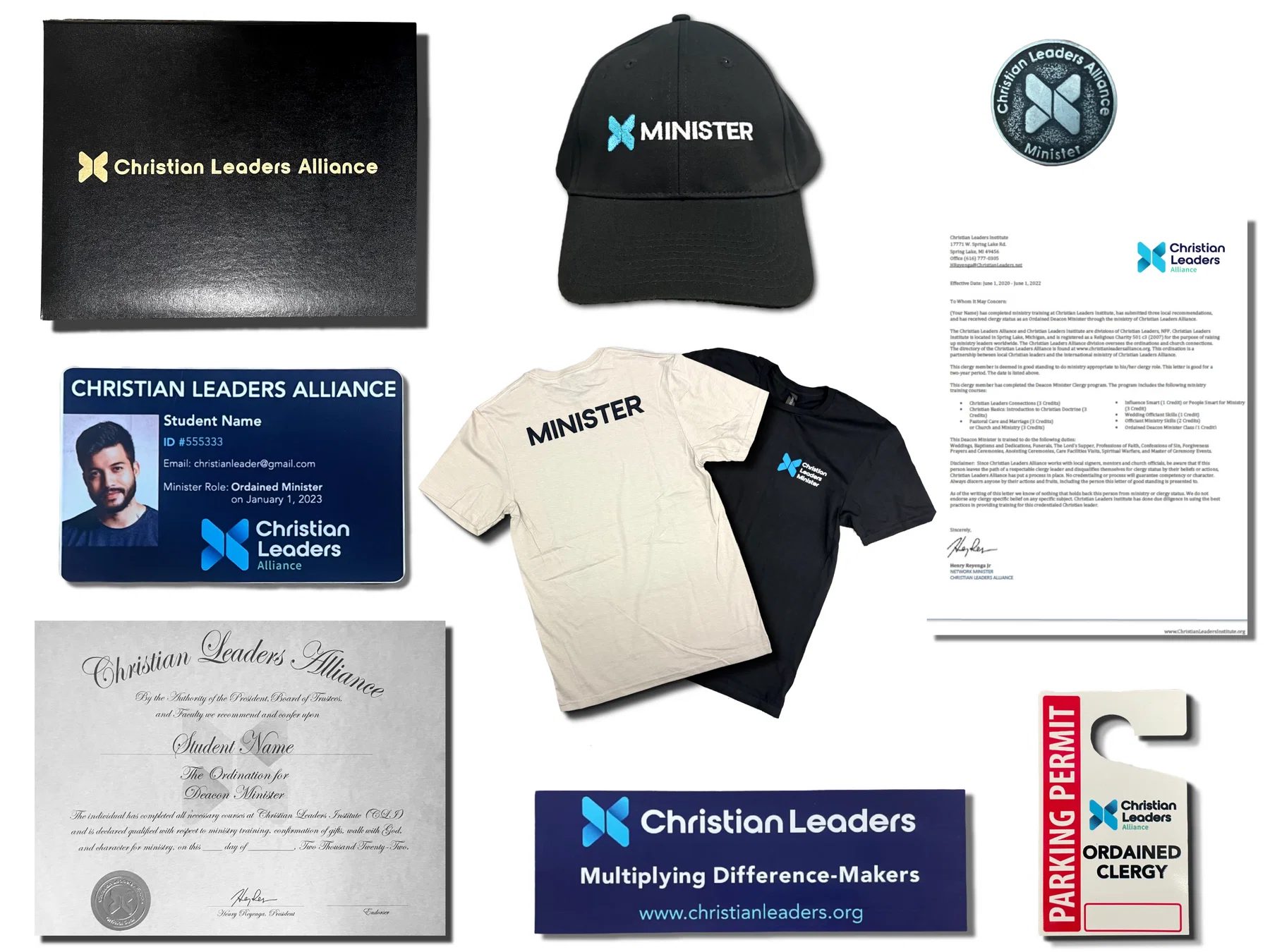
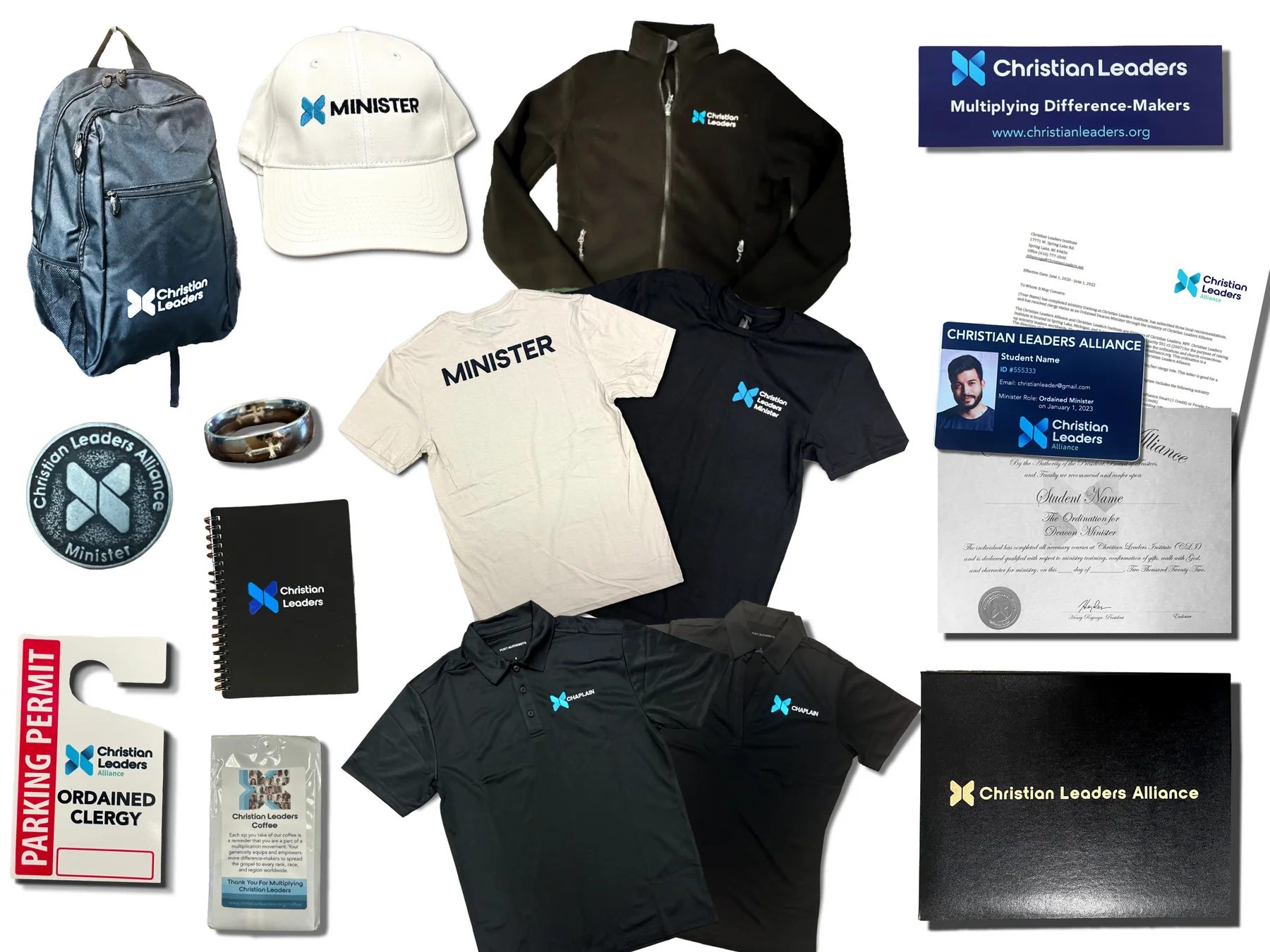
Wedding officiant ordination Premium Kit with comprehensive credentials, apparel, and ministry tools

Comprehensive Recognition Package

Christian Wedding Officiant Kit — Premium

The most comprehensive Christian Wedding Officiant package.

Designed for leaders who want an extensive collection of credentials, apparel, ministry accessories, and practical resources for ongoing public ministry.

Best For

Experienced or active officiants who want the broadest collection of recognition documents and ministry resources.

See Current Price, Choices & Kit Contents

Compare the current Basics, Essential, Plus, and Premium recognition options, review the latest included items, and see current product pricing directly in the Christian Leaders Store.

Prayer, Community Confirmation, and Continued Growth

Commissioning and Accountability

Christian ordination is strengthened when it is confirmed in community. A local commissioning service can publicly place a wedding officiant’s calling within prayer, relationships, accountability, and Christian service.

Suggested Elements of the Service

A Commissioning Service May Include:

The order, language, participants, and traditions may differ by Christian community, but a commissioning service can include the following elements.

  1. An introduction of the candidate
  2. A testimony of calling
  3. Recognition of completed training
  4. An affirmation of Christian faith and ministry commitments
  5. A charge to serve couples faithfully
  6. Prayer
  7. Laying on of hands according to the community’s tradition
  8. Presentation of credentials
  9. A commitment to continued accountability and growth
  10. A blessing upon the officiant’s future ministry

An Important Clarification

Commissioning Complements the Pathway—it Does Not Replace It

Commissioning does not replace required study, Christian endorsement, Christian Leaders Alliance recognition, continued good standing, or local marriage-law requirements. Instead, it publicly locates the officiant’s ministry within prayer, relationships, accountability, and Christian community.

Prepared. Recognized. Accountable.

Wedding officiating should not become isolated or self-appointed ministry. The bride and groom deserve an officiant who is prepared, recognized, accountable, and willing to keep learning. Christian service is strengthened when calling is practiced within community.

The Wedding Officiant Skills and Ordination course includes an optional commissioning-service outline that can help a church, fellowship, ministry, Soul Center, or other Christian community plan a meaningful service of prayer and public affirmation.

Training, Recognition, Legal Requirements, and Ministry Practice

Frequently Asked Questions

Explore common questions about Wedding Officiant Ordination, tuition-free training, Christian Leaders Alliance recognition, marriage-law responsibilities, credentials, ministry boundaries, and opportunities for continued service.

01

Training and Ordination Recognition

Getting Started with Wedding Officiant Ordination

What is wedding officiant ordination?

Wedding officiant ordination is ecclesiastical recognition of a person who is trained and called to serve as a wedding officiant within a religious body.

Through Christian Leaders Alliance, the candidate completes Christian wedding-officiant training, receives local endorsement, completes current recognition requirements, and is recognized as an Ordained Christian Wedding Officiant.

Civil authority remains governed by the law where the ceremony occurs.
How do I get ordained to officiate a wedding?

Begin by creating a free Christian Leaders Institute account and completing Wedding Officiant Skills and Ordination.

Complete the course assessments, provide the required local endorsement, and fulfill the recognition requirements shown in your credential planner.

After recognition, verify the marriage laws and registration requirements where the wedding will take place. Do not assume that ordination eliminates state, county, provincial, or local requirements.

Can I complete wedding officiant ordination online?

Yes. The Christian Leaders study and recognition process is accessible online.

However, online does not mean instant. The pathway includes actual training, assessments, local endorsement, and recognition requirements.

The online format makes participation accessible; it does not eliminate preparation or accountability.
Is this instant wedding officiant ordination?

No.

Christian Leaders Alliance offers an accessible and comparatively brief pathway, but it is study-based rather than instant-only.

Candidates complete instruction, engage course materials, pass assessments, and receive endorsement before ordination recognition.

The purpose is to prepare you for the wedding, not merely give you a title.
How long does the foundational training take?

The current Wedding Officiant Skills and Ordination course is one module with an estimated study time of approximately two to five hours.

The total time needed for ordination may be longer because students must also complete the endorsement and recognition steps.

Completion time depends on the student’s pace and how quickly the supporting requirements are completed.

Is the wedding officiant training free?

Yes. The foundational training is available tuition-free through Christian Leaders Institute and is supported by donations.

Official physical credentials, printed certificates, identification cards, ministry resources, and recognition kits are optional purchases after qualification.

A credential-kit purchase does not substitute for completing the ordination requirements.
Can I become ordained to officiate one friend’s or family member’s wedding?

Yes. Many people begin because someone they love asks them to officiate.

The program is suitable for a single wedding while also offering a pathway into continued service.

Preparing for one wedding does not make the calling insignificant. The bride and groom still deserve an officiant who understands the ceremony, covenant, rehearsal, legal responsibilities, and marriage-license process.

02

Marriage Laws and License Responsibilities

Is online wedding officiant ordination legal?

The fact that training and recognition occur online does not by itself determine civil validity.

The controlling question is whether the law where the ceremony occurs authorizes someone with your ecclesiastical standing to solemnize the marriage and whether registration, documentation, witnesses, or other procedures are required.

Contact the state, county, province, municipality, registrar, or marriage-license authority before officiating.
Is Christian Leaders Alliance wedding officiant ordination automatically accepted in every state?

No religious organization should make an unqualified promise that one credential automatically satisfies every jurisdiction under every circumstance.

Marriage laws and administrative practices differ. Some jurisdictions require no advance registration. Others may require documentation, registration, letters of good standing, proof of ordination, residency, or other steps.

Currently Christian Leaders Alliance Ordained Leaders have ecclesiastical ordination standing in every state in the United States.
Do I need to register with a state or county before officiating?

That depends on the jurisdiction where the ceremony will occur.

Some states do not require advance registration. Some states, counties, cities, or territories require an officiant to file documents or register before the wedding. Requirements can also change.

Ask the office that issues the marriage license:

  • Who is authorized to solemnize marriages?
  • Must the officiant register before the ceremony?
  • What ordination documents are required?
  • Are witnesses required?
  • Who returns the completed license?
  • What is the return deadline?
Do I need a wedding officiant license?

“Wedding officiant license” is a common search phrase, but it can be misleading.

Usually, the bride and groom receive the marriage license. The officiant may need ordination, ecclesiastical credentials, registration, proof of good standing, or another form of authorization depending on local law.

The government office where the ceremony occurs can explain the precise terminology and documentation required.
What does the officiant do with the marriage license?

Procedures vary by jurisdiction.

Generally, the bride and groom obtain the marriage license before the ceremony. The officiant reviews it, confirms that it is valid for the date and location, completes and signs the appropriate portions after the ceremony, obtains witness signatures when required, and returns it—or ensures that it is returned—according to local instructions.

Never guess about deadlines or mailing procedures. Follow the instructions of the issuing authority.
Can I officiate a wedding outside the United States?

Possibly, but every country and region establishes its own marriage laws.

Some countries separate the civil and religious ceremonies. Others authorize only specified government officials or registered religious leaders.

Before officiating internationally, contact the relevant civil registrar or marriage authority and confirm the requirements in writing.
03

Qualifications, Ministry Roles, and Responsible Practice

Roles, Credentials, and Ministry Boundaries

Do I need a ministry degree to become an Ordained Christian Wedding Officiant?

No college degree is required for the foundational wedding-officiant role.

You must complete the designated training, endorsement, and recognition requirements.

Leaders called to broader pastoral, preaching, church, chaplaincy, or ministerial responsibilities may continue into more extensive ministry and degree programs.

Do I already have to be a pastor?

No.

The wedding-officiant pathway is designed for Christian volunteers, family members, church leaders, ministry workers, and existing clergy.

It can be a focused ceremony role or the beginning of a broader ministry calling.

Can women become Ordained Christian Wedding Officiants through CLA?

Yes. Christian Leaders Alliance recognizes qualified Christian women and men who complete the applicable study, endorsement, and recognition requirements and remain in good standing.

What is the difference between Christian Leaders Institute and Christian Leaders Alliance?

Christian Leaders Institute provides the educational training.

Christian Leaders Alliance provides ecclesiastical recognition, credential standing, directory recognition, ordination pathways, and ministry accountability.

CLI trains. CLA recognizes.
What is the difference between a Wedding Officiant and a Wedding Minister?

An Ordained Christian Wedding Officiant is prepared primarily to plan, rehearse, and lead wedding ceremonies.

An Advanced Wedding Officiant develops higher ceremony competence and learns to navigate complex wedding situations.

A Wedding Minister develops a broader ministry that may include premarital preparation, couple care, marriage formation, marriage enrichment, referrals, and post-wedding support.

Can a wedding officiant provide premarital counseling?

A wedding officiant may provide Christian premarital ministry, spiritual encouragement, discussion of marriage expectations, prayer, and appropriate educational resources within the person’s training and competence.

An officiant should not present as a licensed mental-health professional unless separately qualified and legally authorized.

Couples needing clinical assessment, trauma treatment, addiction care, abuse intervention, or mental-health services should be referred to appropriately qualified professionals.
Must I buy a Christian Wedding Officiant Kit?

No. Purchasing a kit does not create ordination and is not a substitute for completing the program.

Ordination candidates who complete the program are permitted to order their official credentials. Recognition Kits are available including printed credentials, an identification card, a letter of good standing, ministry resources, apparel, or other recognition materials.

A local civil office or venue may request particular documentation, so verify what is required.

Can I charge for wedding-officiant services?

Wedding officiants may serve as volunteers, accept donations, or operate a fee-based practice where permitted.

A person building a paid practice must separately consider local business registration, taxation, contracts, insurance, consumer-protection requirements, and other applicable laws.

Christian Leaders Alliance ordination and Soul Center registration do not automatically resolve those matters.
04

Wedding Ministry, Soul Centers, and Broader Ordination

Continued Ministry Growth

Can I start a wedding ministry or Soul Center?

Yes. Qualified Christian Leaders Alliance leaders in good standing may pursue training in developing a wedding ministry and may explore Soul Center registration.

A wedding-focused Soul Center may provide ceremonies, premarital encouragement, marriage enrichment, couple follow-up, Christian referrals, or other appropriate ministry activities.

Current registration, doctrinal, leadership, and compliance requirements still apply.
Can wedding officiant ordination lead to broader ordination?

Yes.

Some leaders remain focused on wedding ceremonies. Others continue into Advanced Wedding Officiant, Wedding Minister, specialized officiant, chaplain, coach, Licensed Minister, Ordained Minister, or Minister of the Word pathways.

Wedding officiating can be a meaningful ministry in itself and an accessible entry point into broader clergy preparation.

Ecclesiastical Recognition and Civil Authority Are Distinct.

Christian Leaders Alliance provides Christian ordination recognition and ministry standing. Every wedding officiant remains responsible for contacting the appropriate marriage-license authority and following the laws, registration rules, documentation requirements, witness procedures, and filing deadlines where the ceremony will occur.

Practical Guidance for Christian Wedding Ministry

Wedding Officiant Resources

Prepare for more than Wedding Officiant Ordination. Explore practical guidance, legal-awareness resources, ceremony ideas, rehearsal support, and ministry-development articles.

Curated Resources  Come First.

These strategically selected evergreen resources give visitors clear starting points for training, ceremony preparation, legal research, rehearsal leadership, and ministry development.

Your Next Faithful Step Begins with Preparation

Your First Wedding Deserves More Than a Rushed Credential

The bride and groom have entrusted you with one of the most important moments of their lives.

Prepare to serve them with biblical understanding, ceremony competence, legal diligence, pastoral warmth, and accountable Christian ordination.

Biblical Understanding

Ceremony Competence

Legal Diligence

Accountable Ordination

Study-Based Training. Christian Ordination. Confident Wedding Ministry.
Whether this becomes one act of faithful service or the beginning of an ongoing wedding ministry, your preparation matters. Begin with the pathway that fits the calling and opportunity before you.